

After the art museum we decided to have a late lunch and ended up in a calzone shop in the Tower Grove neighborhood; Sauce On The Side. Nothing like good food and good beer to keep a hungry tourist going! I will say this, I was not hungry after eating that calzone, it was big.
Next stop on our day trip was the Missouri Botanical Gardens. Since it was too cold to see the landscaping and the flower beds, it may not have been the best choice. Also, I was not sure if the varieties in the greenhouse were extensive enough to make the price of admission worth while. However, it was Rebecca’s idea so I did not share my thoughts. But on the ride over she talked about the full size tropical trees in the green house, which changed my mind.
When we pulled into the parking lot I saw that the new, ultra modern visitors’ center was still under construction. Judging by the architect’s renderings I saw online after our visit, we would walk though a small part of that new structure. Despite that area being simple in design, the interior was an interesting division of vertical and horizontal space. The first room evoked a sense of vertical spaciousness, with it’s tall walls, large windows and the light colored materials used in its building. The next room, where the ticket windows are, opens up horizontally and achieves that same open feeling but in opposite direction. I hope this engaging division of the interior space is used through out the entire building. If so, there might be another building in St. Louis to make my favorites list.
The old visitors’ center is next to this building and is slated for demolition. Currently, it houses a Dale Chihuly glass chandelier; which will be relocated in the central glass atrium of the new structure. If you are in the city when the new visitors’ center is completed, just seeing that chandelier is worth a trip over there. I have seen many of Chihuly’s glass sculptures and they never fail to impress and amaze.
The path we took to the indoor garden, or the Climatron, gave me an interesting view of the grounds exposing the layers of architecture that were added over the hundred a fifty eight year history of the institution.
When I left the new visitors’ center, a modern space designed with modern thinking and built with contemporary materials, I was confronted with the old greenhouse, a vintage structure built in the early 1900’s. Its tall windows with their multiple rows of small glass panes, and set in a rough exterior of dark red brick and white mortar, had a vivid contrast to the tall seamless expanses of glass set in the shiny metal walls of the visitors’ center. In one respect, the new visitors’ center was an updated version of the old greenhouse.
Then I approached the Climatron which was a short distance up the path.
When it was built, this structure was also ultra modern in every way. Now it looks dated and old fashioned in its own way.
It is a geodesic dome with a design sensibility straight out of the green movement of the 1960’s. To put it in a cultural context it has California commune and Bucky Fuller futurism written all over it. It reminds me of the biosphere space station from that forgotten 1972 Sci Fi film Silent Running.
Even its’ name, Climatron, has a 60’s sci-fi feel – Ultron, Atavachron, to mention a few others names from the distant past of my childhood.
Seeing the Climatron immediately after the old brick building was not just a vivid contrast but a jarring one. Unlike the first architectural contrast I encountered, the shape as well as the materials used to build this unique dome like structure, were completely different from the long brick green house of sixty years before.
One employed spherical proportions in its design and an intricate aluminum exo-skeleton framing triangular acrylic panels for its construction. The design and the materials developed in the 20th century.
The design of the other was based on square forms and constructed with small blocks of baked earth stacked up and held in place with mortar and supporting traditional steel roof beams and window frames. Everything that went into making this structure is has been used for centuries.
Probably the only architectural feature these two buildings have in common are the shape of their doors.
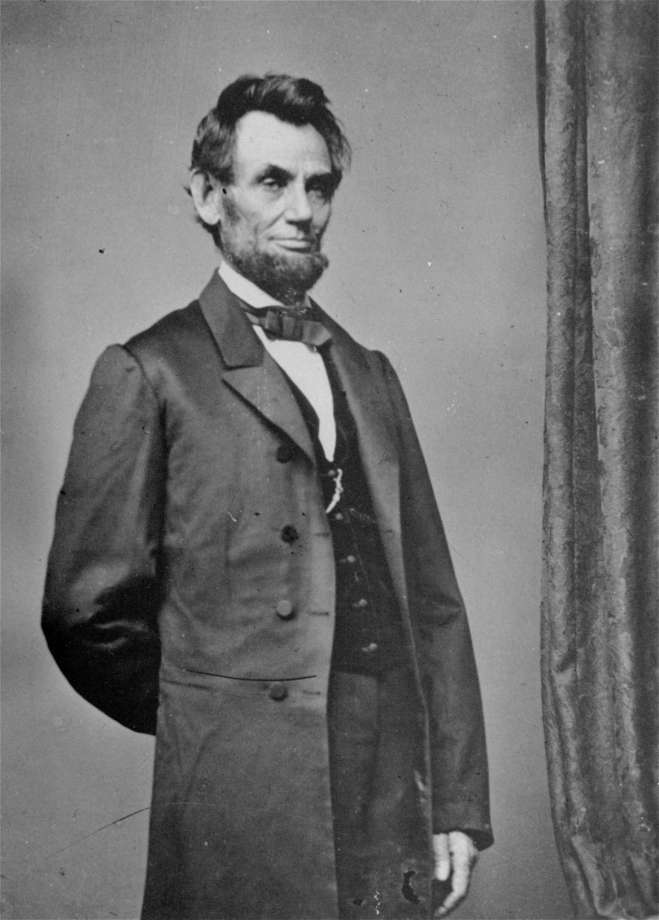

It was like looking at Abe Lincoln standing next to Captain James T Kirk. (!)
It also made me think that advancements in technology and engineering continually change the look of everything; just as much as the changing design sensibilities of the next generation of designers and architects do.
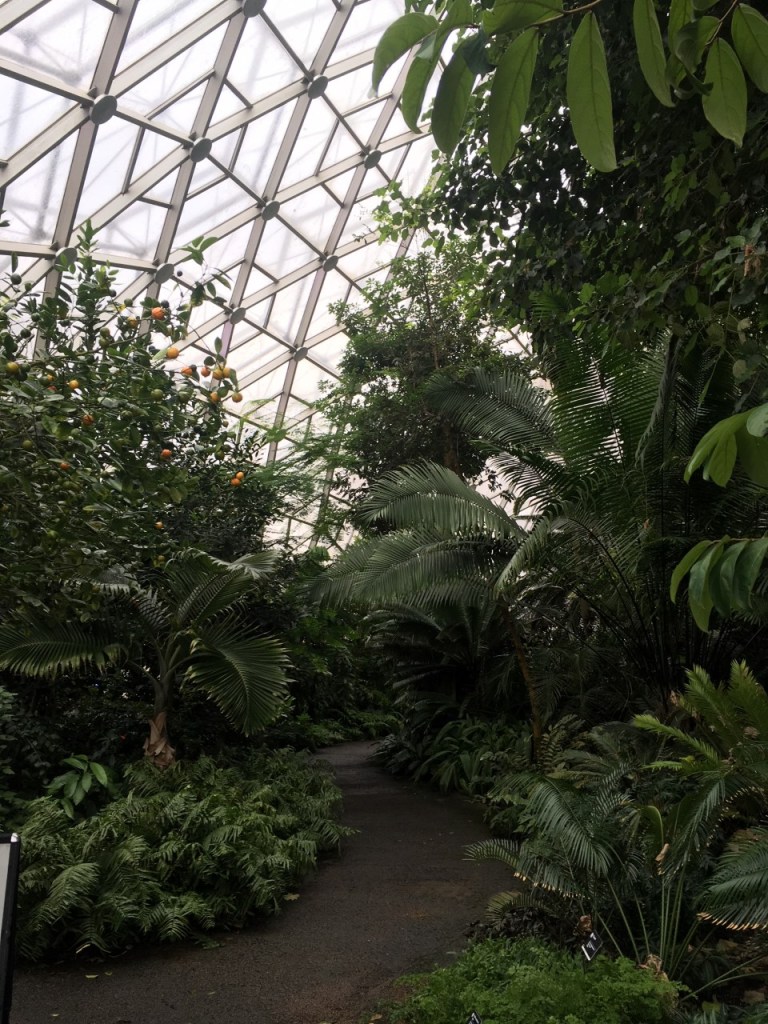
Stepping into the conservatory the dry, chilly air of late autumn was replaced with the heavy, moisture laden air of the tropics. We were shaded by full grown trees and surrounded with dense green foliage replete with strange and wonderful flowers, the likes we had never seen before. Flowing through this super sized terrarium was a stream with a waterfall as well as small pools supporting a variety of water plants. I even saw a big gecko clinking to the side of a tree like a garden decoration and heard a bird calling in the canopy above.

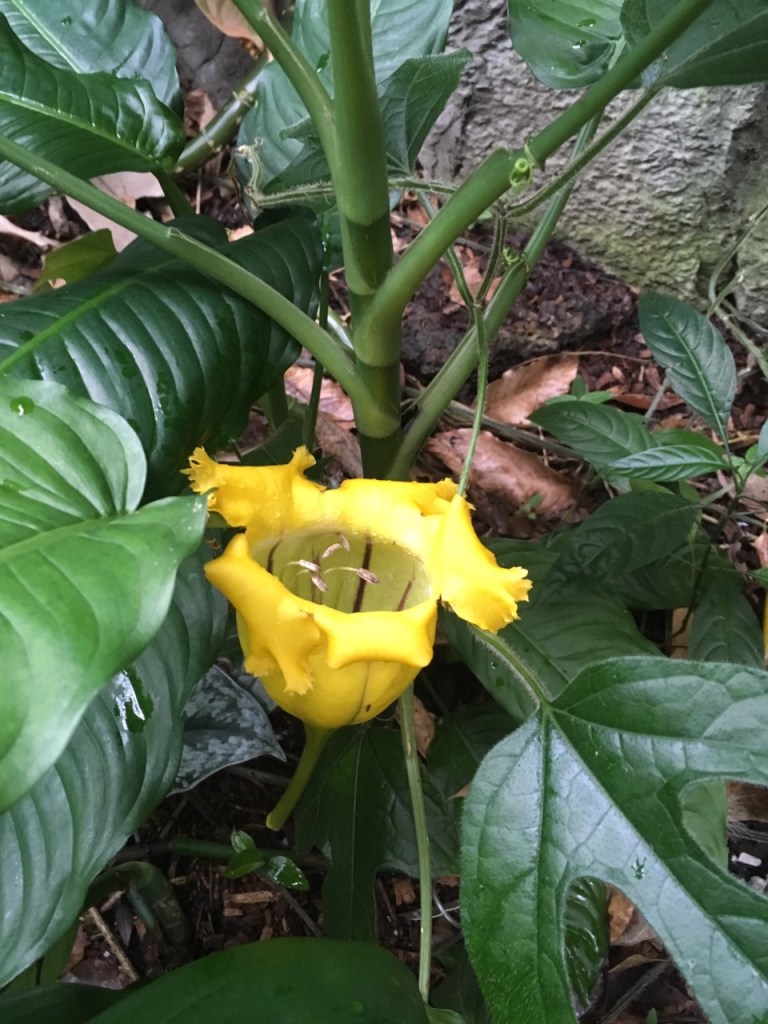
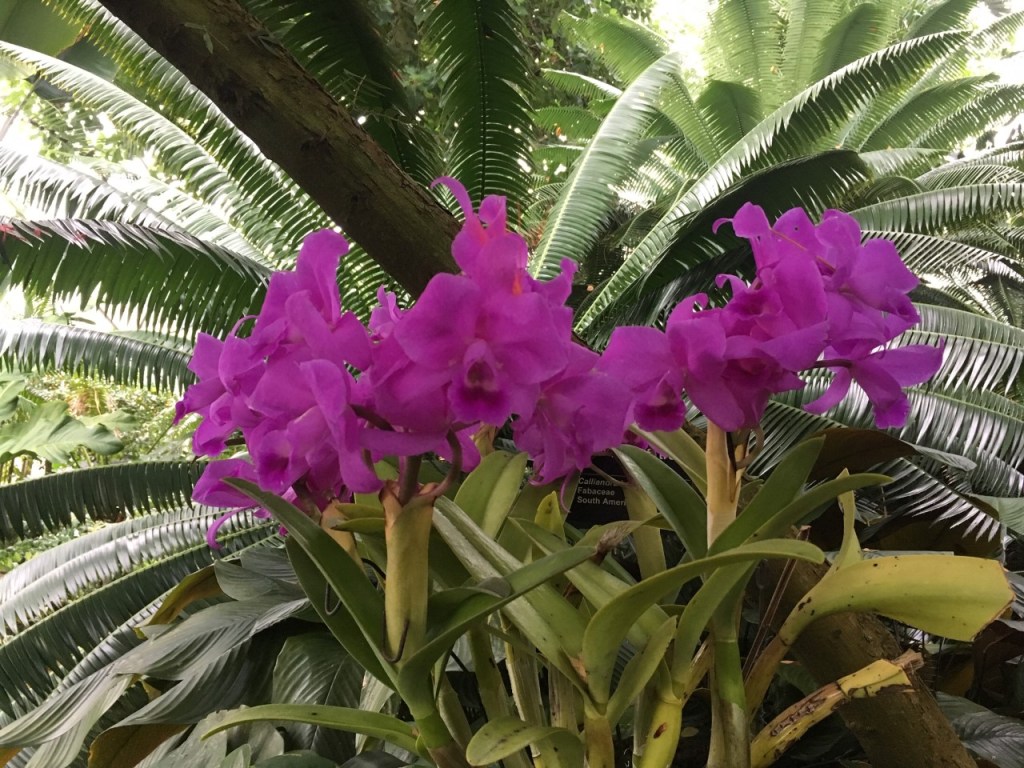
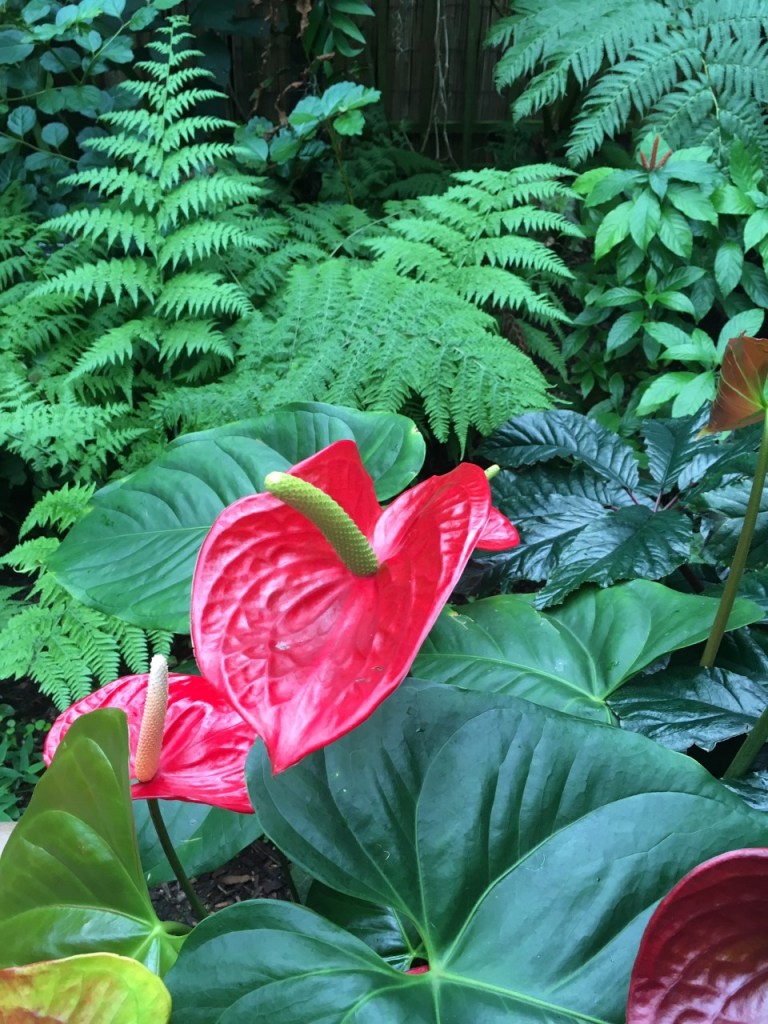
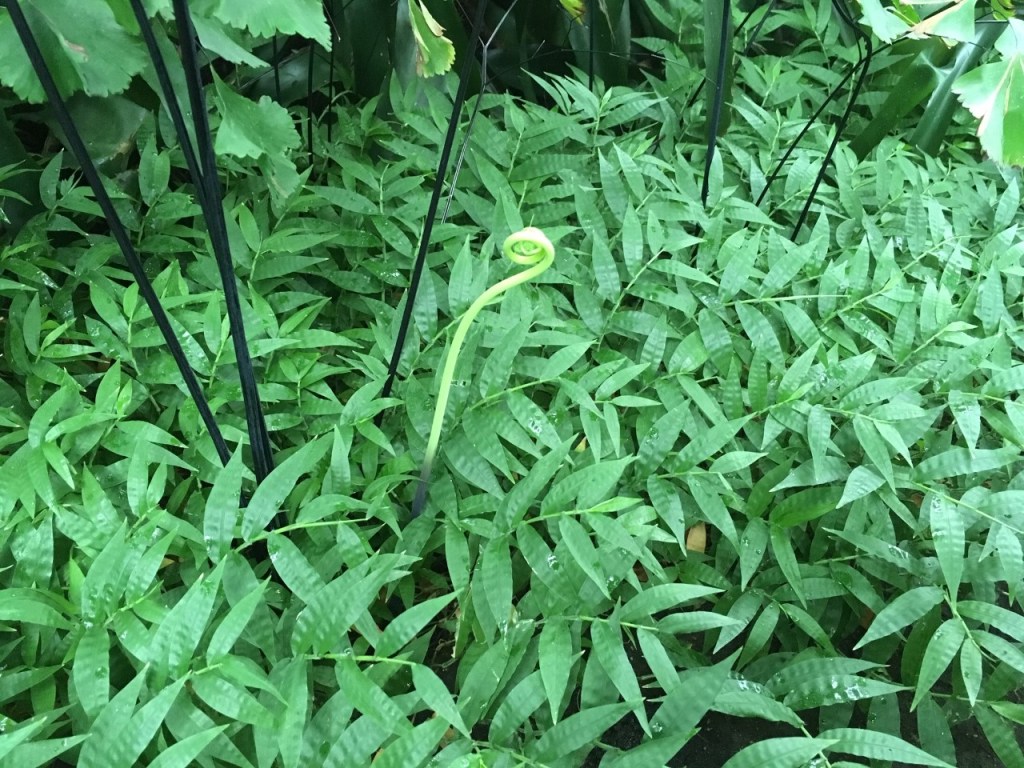
For the better part of an hour we walked the path at an unhurried pace and stopped frequently to take photos. Beside us, there was only four visitors roaming through the place, which made me feel like I was exploring and not just visiting.
After our visit to the botanical gardens we had some time before our dinner reservations at a sushi place named the Drunken Fish. It is near Forest Park, not far from the art museum. It is also near the De Baliviere, a neighborhood packed with lovely historic houses and majestic old trees. Several blocks of this area comprise a gated community and the streets are considers private property. It also has two private swimming pools and two private tennis courts exclusively for the use of its residences.
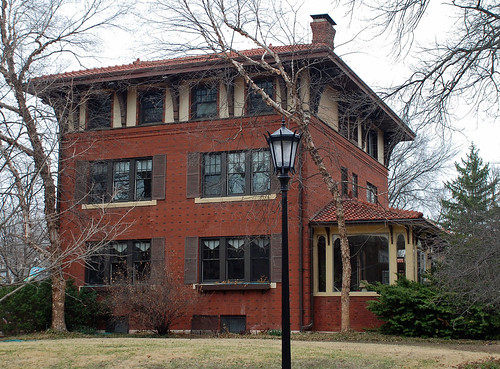
This area was made fashionable for residential living by the 1904 worlds fair; which was located in Forest Park.
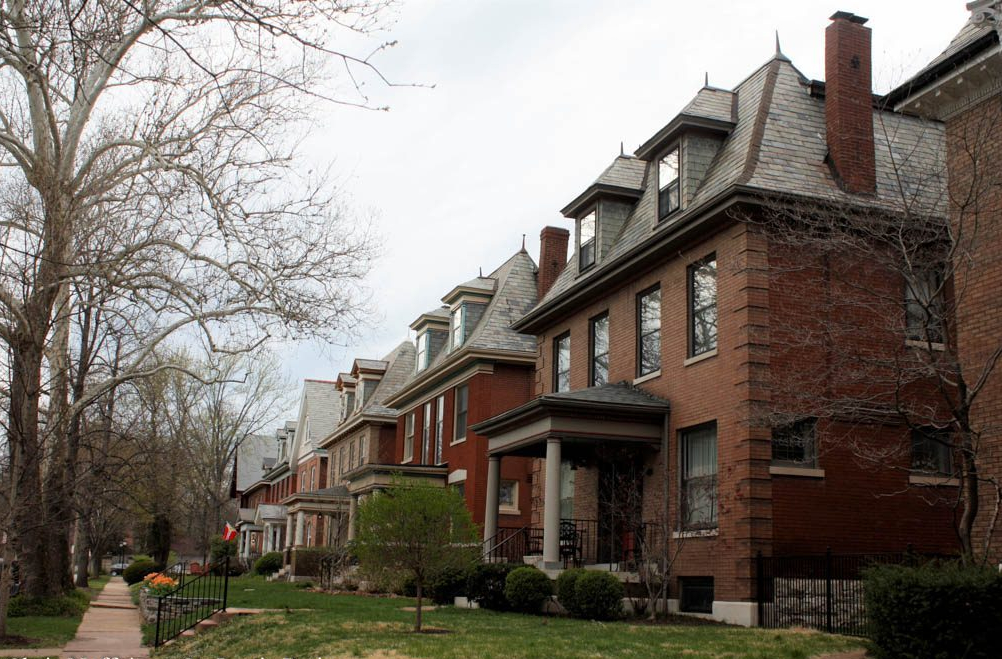
When we were done driving around and had our fill soaking up the grand architecture of this charming community, we decided to skip dinner and head home. We were still full from lunch. We also had a three hour ride back and I did not want to do that after a long day of site seeing.
On the ride home the big city quickly gave way to a landscape of barren corn fields stretching out under a wide blue sky. We did not talk much but then we did not need to. We were still thinking about our urban adventure, the amazing art we saw, the jokes we laughed at and the good food we eat together.

It seemed we both wanted to make that time in St. Louis last as long as we could.
Everyday holds something incredible, we just have to look for it.
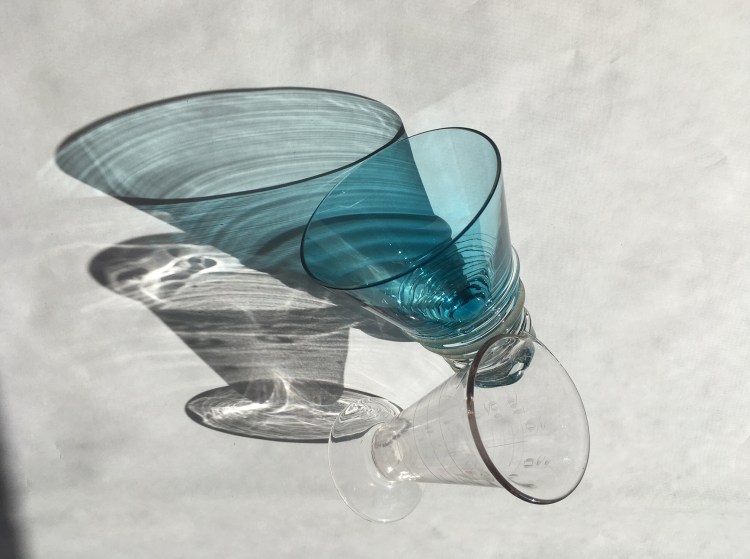
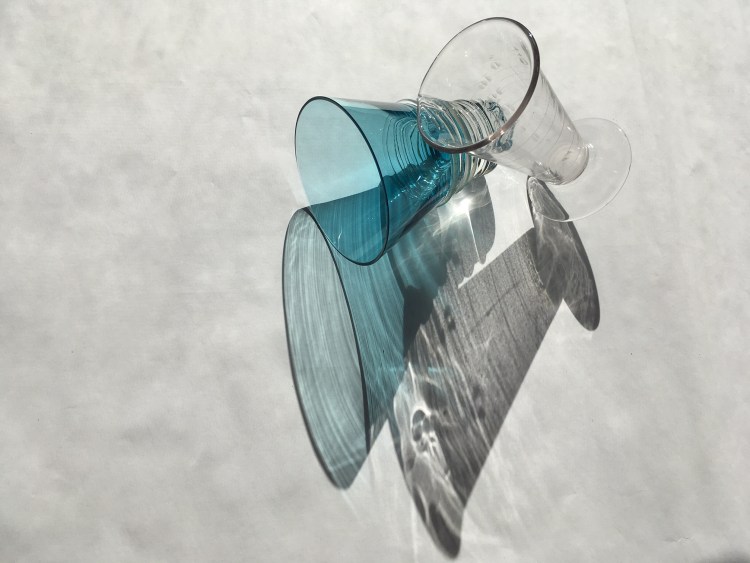
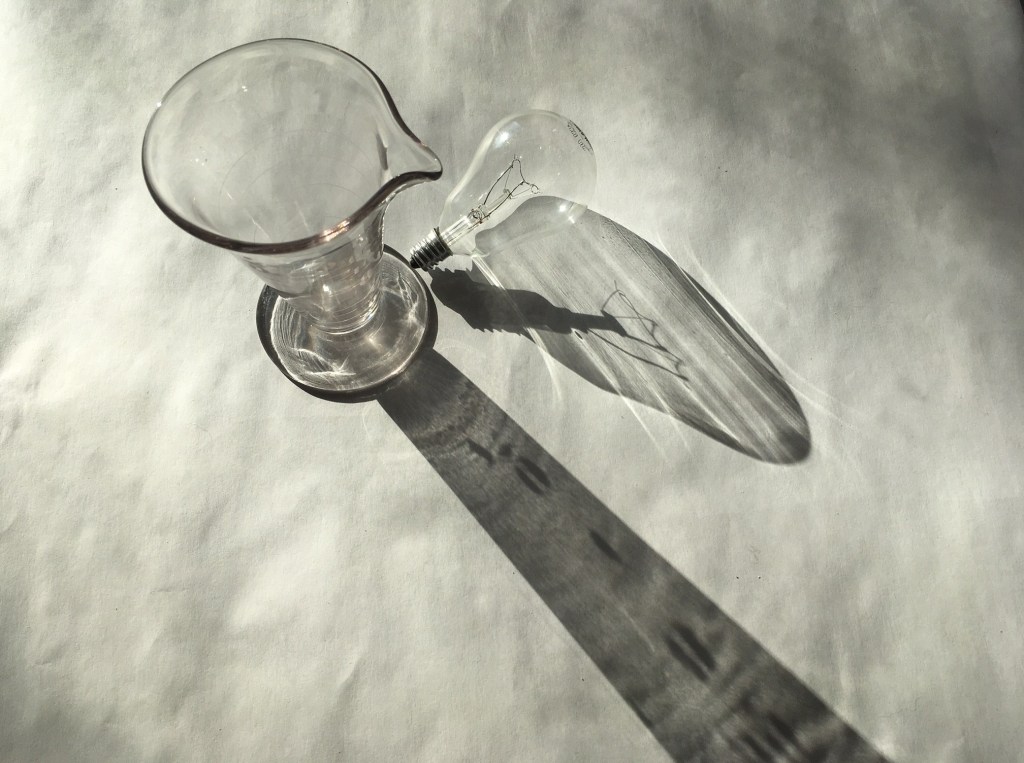
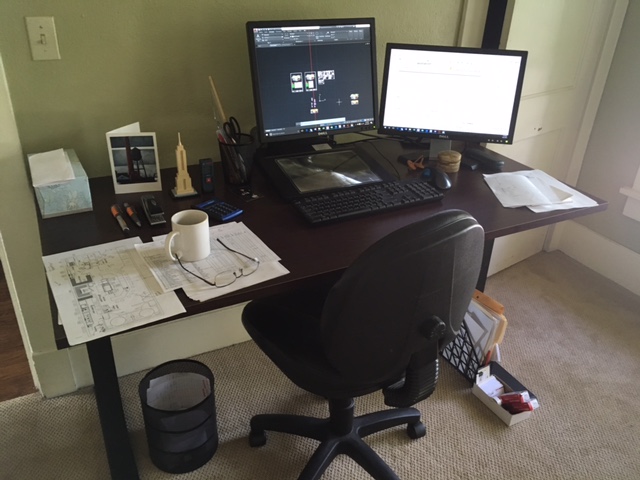
I spend a lot of time reading and writing at my desk. It is the intellectual center of my world, my seat of creativity, the central place where my reasoning, self awareness, and memory project outward into the material world; as if they are flesh and blood people that have colonized a small corner of a foreign land.
Like any settlers to a new land they transform what they find to fit there need. In this case a suitable place for this engine of creation to do its’ work.
Over time I have realized that their motivation for transforming my desk top originates in my unconscious mind; which seems to have its’ own volition operating separately from my conscious mind.
If you are thinking that I may have a multiple personality disorder or need counseling to control a compulsion, let me say this; as a chef I have worked at plenty of desks where I had no desire to do this. Secondly, despite being something I automatically do, but only when I can, my conscious mind enjoys arranging a desk. It’s like picking out what cloths I am going to wear to a meeting.
I see a resemblance between creating a space to think and the work of our ancestor’s in creating spaces for worship and prayer. The placement of standing stones by prehistoric cultures or the ancient Catholic practice of using icons to focus prayer to God readily come to mind.
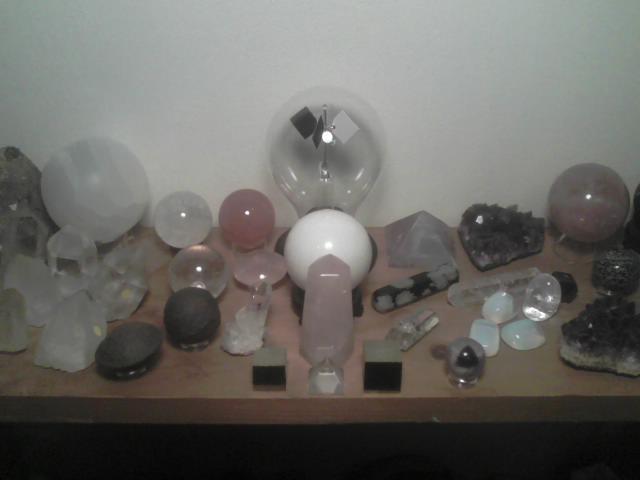
My ‘standing stones’, or desk stones, are objects that define the desk top as a thinking space. They also focus the creative energy onto that defined area, aiding the intellectual process. These objects are things, or representations of things, that I am fascinated with and have spent time studying and thinking about. Interesting rocks and crystals, models of mining machines are two examples. Icons however, evoke powerful and positive memories or thoughts that refresh and invigorate the will to create. I have used Precisionist art work, elegant porcelain pottery, and die cast models for my icon equivalents.
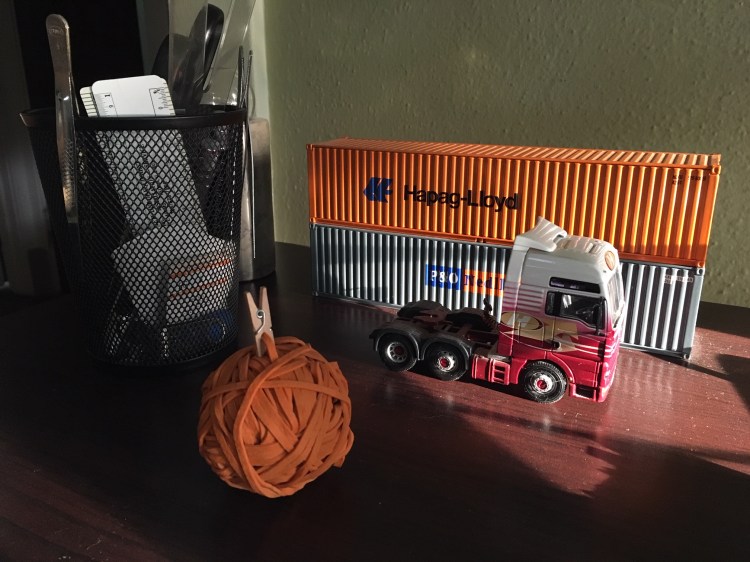


Sometimes I need a space to think when I am not at my desk. It could be a different room in the house or out side of the house entirely. If in another room, other stones are chosen and positioned in strategic locations. These are places where I spend time planning activities but don’t have the room for a desk. One spot is my bureau where I get dressed for the day. I often plan out the order of what I have to do during the day, while I am putting on a ring or a watch. Over the years a set of miniature Carnac stones has been arranged and rearranged many times on it’s polished wood top.

If an additional space is needed outside of the house, such as a public seating area, a job site for work, or a relative’s home, then it cannot be personalized. Often, I work in that space as it is. But if I have the time I will take a moment to find a suitable place where the mix of light and shadows, the interesting prospective of a room’s architecture or the arrangement of furniture and fixtures can create a an environment suitable to think in.
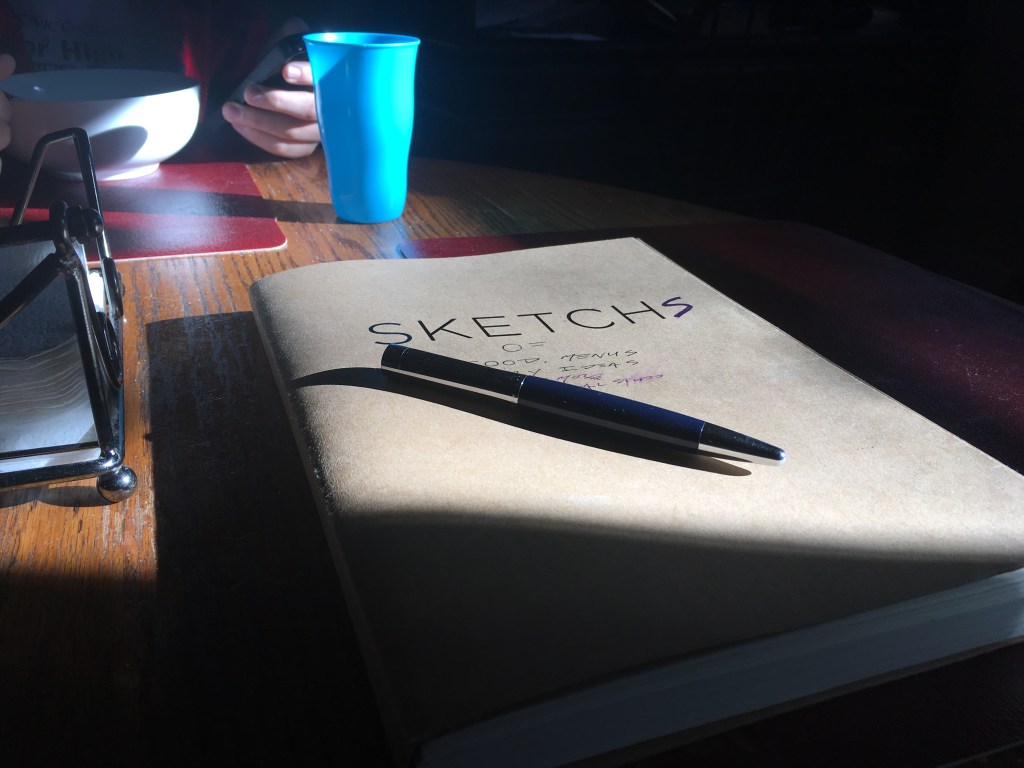
In some respects, my mind is like a clever sea creature that lives in a shell. It can construct it’s own accommodation or just occupy one left vacant by another sea creature that has moved on; whatever suits the situation.
Sometimes I think this habit is an unnecessary expenditure of time and money and I am justifying it by comparing it to ancient standing stones and venerated icons that serve a different purpose.
Then I sit down among the stones, with all the ideas that have been rumbling around in my head, and begin the ritual of writing. When all the travails and efforts of the day are nowhere to be found on this hallowed ground, I realize why that other part of my mind came here to put those stones in place.

But first, a significant document from our founding as a nation.


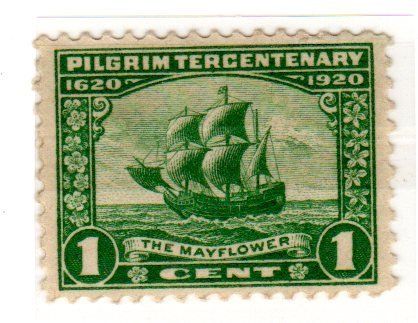


Happy Thanksgiving and thank you for visiting.
An acquaintance owns a store in a high crime neighborhood on the Archipelago island of Decatur.
He immigrated to America from the middle east looking for economic opportunity and a better quality of life. He is not so different from Decatur’s original settlers of the early eighteen hundreds. Though he does not live in a log cabins of his own construction, the wooden building his business is housed in is almost as old as those original cabins.
I call him an entrepreneurial pioneer for another reason too. It can be tough enough to run your own business when the neighborhood is generally safe. But you need the old fashion pioneer’s spirit when surrounded with the heightened crime issues of his location.
A few years ago, he opened up his store in the morning and stepped into the scene at the beginning of this video below.
During the night, while they were closed, a vehicle ran into the side of the building those merchandisers refrigerators are located on.
He realized this when he stepped up to the glass doors and saw daylight streaming into the walk-in behind them, through a very large whole in the wall of the store.
If you listen carefully to the audio, other cars are passing by the store during the accident.
As far as I know the driver was never apprehended and the insurance company never fully compensated him for the damage. Fixing that hole was a very big expense for them to pay for.
It has been three years since that incident and he is still there operating his store. Every so often I drive by and I see some improvement to the property. Recent projects include a new roll down security door and new black top and striping in the small parking lot.
The big hole in the building is gone but not forgotten. The new siding from the repair job, which does not match the older siding around it, will mark that unfortunate event for years to come.
It also marks his determination not to give up on his dream to have a better life in America.
It is a testament to the fact that what he has now is better then what he had in the past and he embraces that and continually works to improve it.
Even in the land of opportunity, he realizes that there is no replacement for positive determination and honest work built on hope in a brighter future.
My relatives that immigrated from Italy had that same view of their new home. They too believed that what they had in America was better then what most had in the world and they were quick to defend it.
In these turbulent times we should be too. We should sing it’s praises, thank God for it’s founding principles and work to build it up.
There are many groups that don’t sing the praises of this nation and don’t embrace our system; a system that offers plenty of opportunities for those who are willing to pursue them. Their goal, their daily struggle, is to tear down what we have built as citizens of this country.
If we believe those that would tear it down what could they replace it with that is better for all?
Five thousand years of civilization has given few, if any, examples of a governmental system that can provide so much opportunity and personal liberty to so many.
As a nation, we must continue the work of the founders to secure our individual liberties, our economic prosperity and our national security. For over two hundred years the founding documents have allowed us to do that. Building on the principle found in those documents will serve us well for another two hundred years and beyond.
Happy Thanksgiving and God bless America.


My daughter needed a break from her studying at university. After talking with her about it, we decided to take a day trip to St. Louis; just her and I. The St. Louis Art Museum, the building and the grounds as well as the collections, was the main attraction for our pocket- sized vacation.

A few years back we did a family trip there so this was our second visit. We both agreed it ranks high on our list of favorites.
When I stepped in side I was greeted with the mysterious echo of voices rising and falling through the spacious central hall. They had a wonderfully mystical quality and I stood there for a minute just taking it in.
We knew from our past trip that our level of enjoyment for this museum was comparable to the The Art Institute of Chicago and The Metropolitan Museum of Art in Manhattan; two institutions we use as standards by which all other art institutions we visit are compared to.


The size and depth of what is on display cannot compare to these other behemoths but visiting every room will definitely occupy your entire afternoon and you won’t be disappointed. (The St. Louis has 34,000 objects catalogued, Chicago has 1,000,000, New York, has 2,000,000.)
Being an avid reader of Roman History I would have been happy with more than just one room of antiquities. But the artifacts on display were perfectly preserved in every detail and matched the quality of any I had seen in the past.
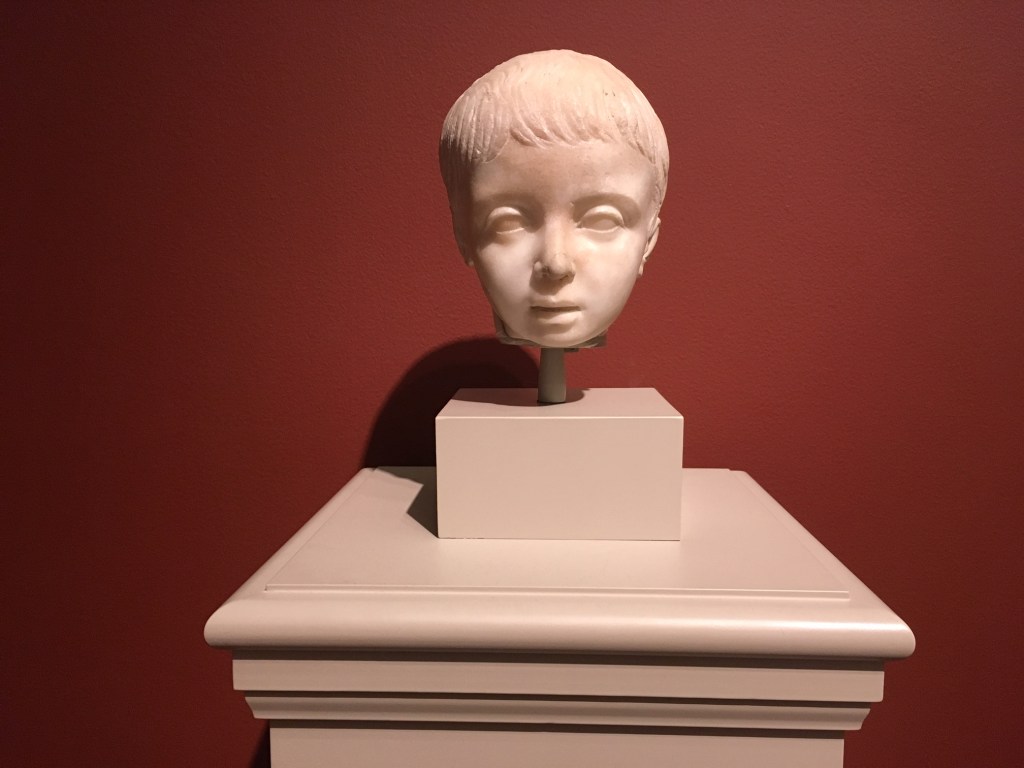
These busts of unknown, but well-to-do citizens, date from the Imperial period.


The examples of tableware were striking in the fact that they were well proportioned, especially the blue bowl. No aspect was exaggerated for the sake of originality. Any decoration was minimal, a relevant symbol of it’s purpose, and well integrated. There is a sense of practicality which in my reading of that culture, is at the very heart of it.
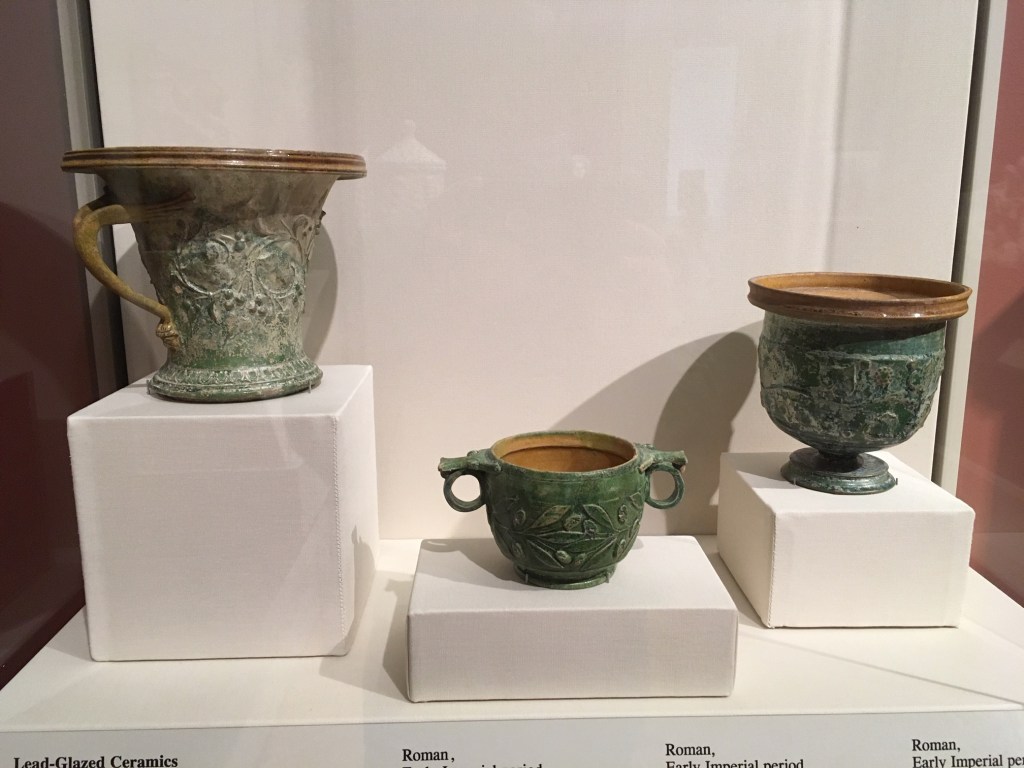
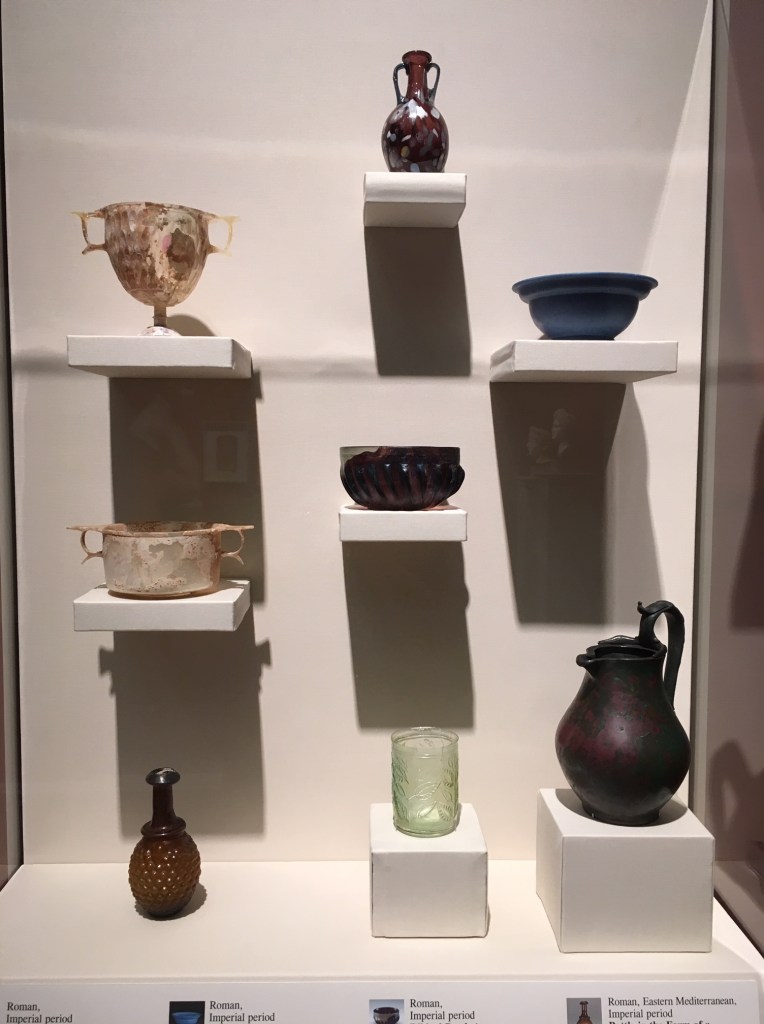
Below are Etruscan earrings dated from the fifth century BC. The level of detail and craftsmanship in this jewelry was impressive. I often think of ancient cultures as not being as sophisticated as modern cultures. But seeing all the objects in this exhibit, made thousands of years ago, had reminded me that aside from scientific, technological and economic understanding, and perhaps a few other ares of knowledge, this is not true.
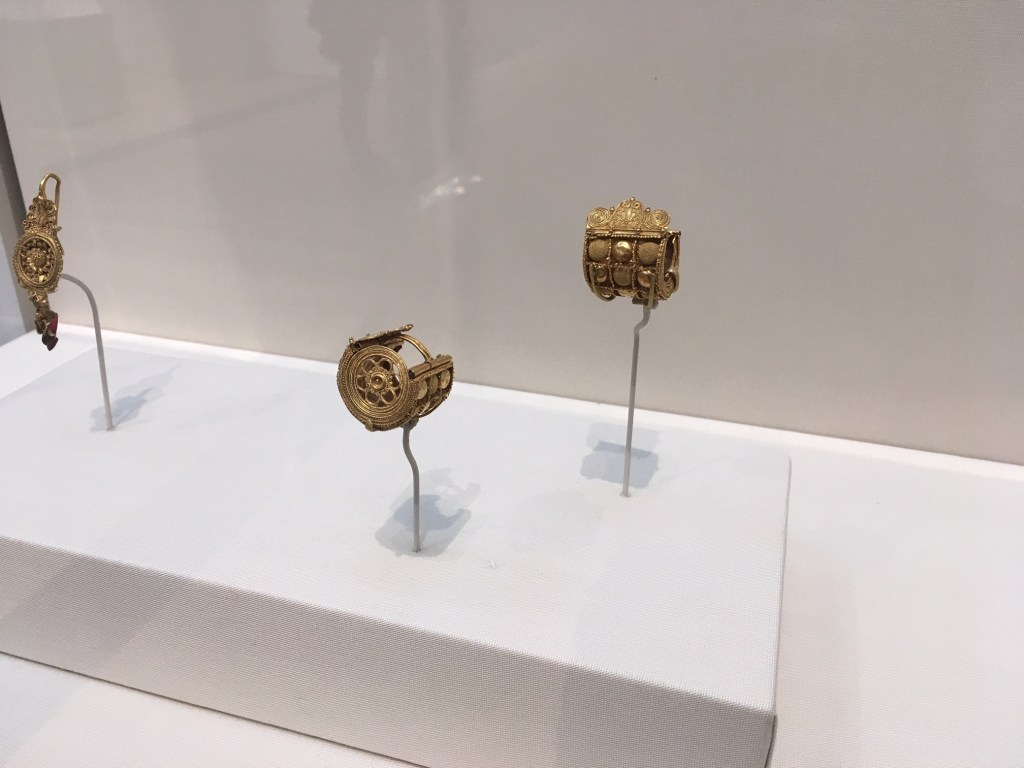
I will say this, Etruscan women must have had strong ear lobes. Those are some big earrings! Evidently, women suffering in the name of fashion is nothing new.
There were modern cultural artifacts, which were a part of the main exhibition – Storm of Progress German Art After 1800. Included were several examples from the Bauhaus design school: form follows function. A combination of useful form bordering on minimalism but incorporates a visual aesthetic based on geometric forms.
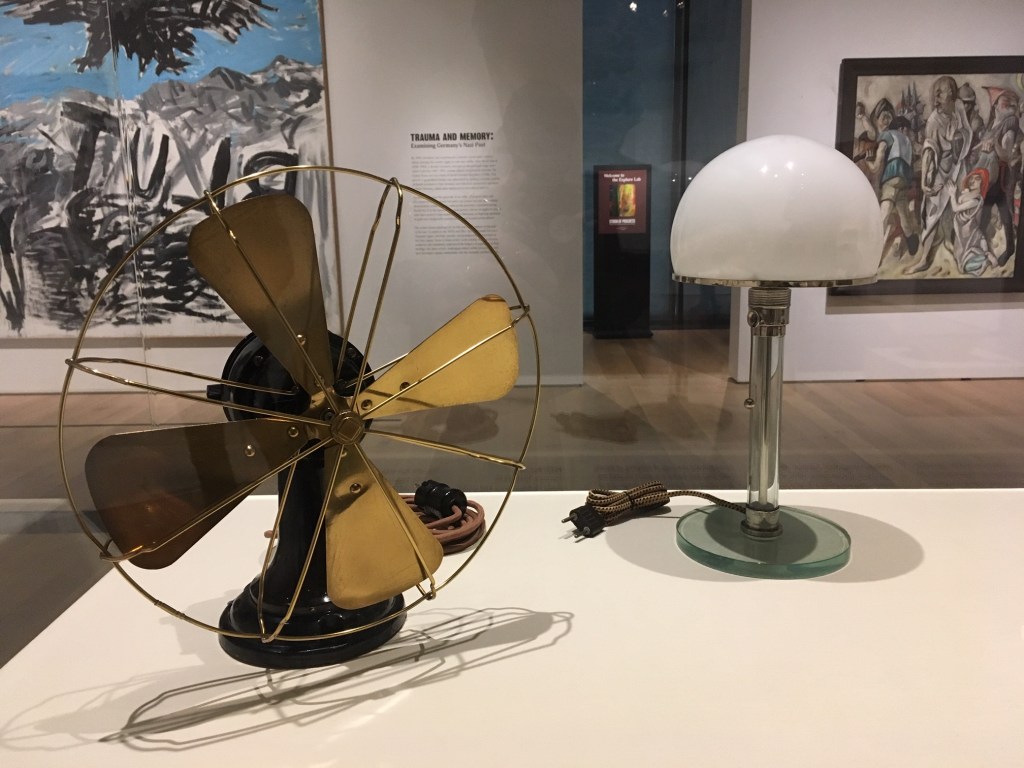
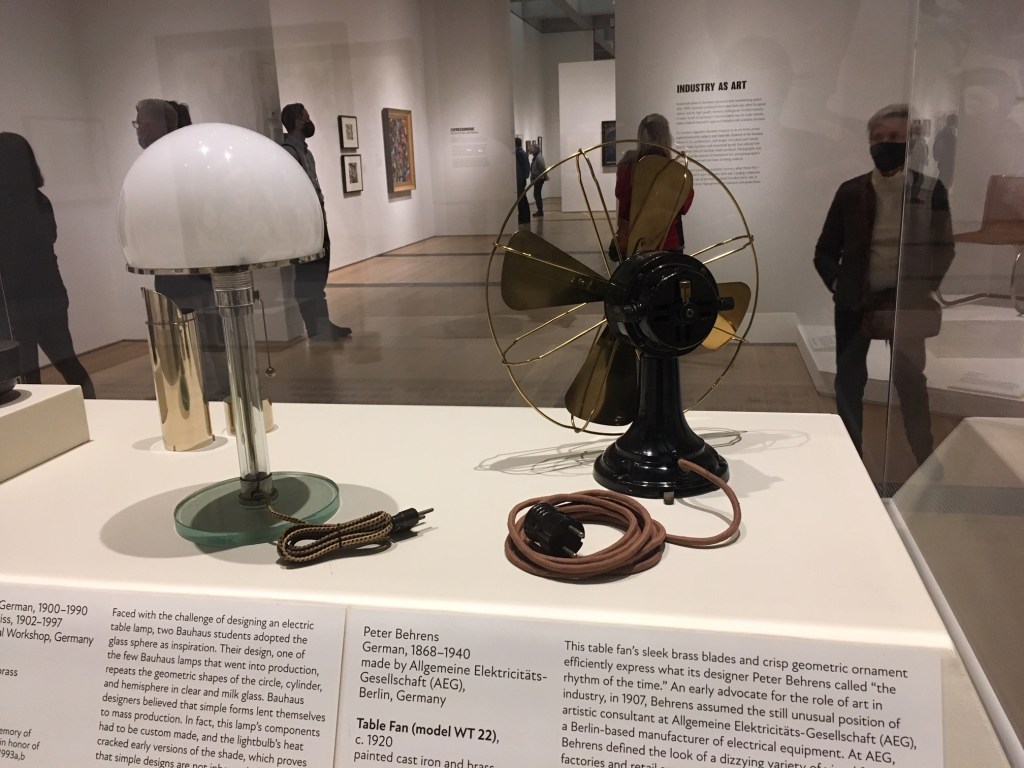
Even though the design of these items and the Roman items were separated by two thousand years of history they had definite commonalities.
The design genius of the Romans and the Bauhaus really shone in the three dimensional objects they made. The consumer goods in both exhibitions were so modern in design and construction as to be interchangeable without noticing the difference in the era. There is a repeat of practicality here.
The same can be said for things outside of these exhibitions – architecture. Compare Bauhaus headquarters building and Emperor Vespasian’s Collusion. They both exemplify the same ethos of form follows function. Also, their is no mistaking who built each of them.
The Bauhaus designers, much like the Romans, achieved their greatest artistic success with practical objects put to everyday use.


The building that houses the collections is an art object in it’s own right.

It was designed by the historically prominent architect Cass Gilbert, who also designed the Woolworth building in down town Manhattan, the United States Supreme Court Building in Washington DC, and the state of Minnesota’s state capital building, among other notable morphological master pieces.
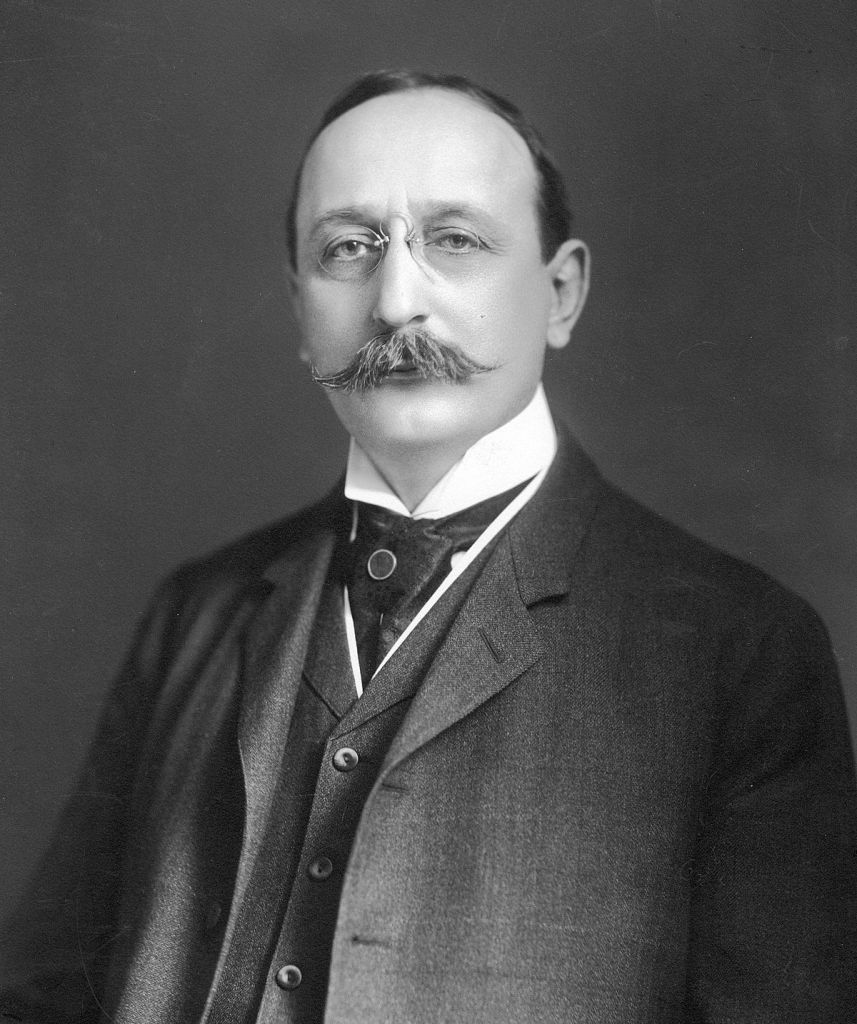
Cass sited the ancient baths of Caracalla in Rome as his design inspiration. The original purpose of this building was to house exhibitions for the 1904 Worlds Fair. The museum was relocated there when the fair was finished.
This visit was a much needed invigoration for our souls and we found we had the same outlook on art. It is a search for perfection by the artist, as well as the viewer. This notion of perfection is embodied in all things pleasing to the mind: in a word – beauty.
Rebecca’s notion of beauty is based on natural forms, landscapes, human form, and animal forms, with little deviation.
I am of the same mind and also find man-made and industrial forms beautiful as well – urban buildings, factories, warehouses, and machines. The geometry of these images, as well as the psychological and cultural implications are intriguing to me.
Oddly enough, we both have reservations about abstract art. We can appreciate it for what it is, the artist’s intent or social messaging but are not naturally drawn to it.
Beauty in the classical sense may not have been captured in every painting but the perfection of the artists vision seemed to be. Each room held a different way of thinking about that vision, each painting a different interpretation of that vision.

I made an immediate and deep connection with so many of these paintings. It was like realizing a profound truth in each one. This inspired me to find this kind of inspiration everyday, wherever I am in whatever I am doing. That is living life to the fullest for me.

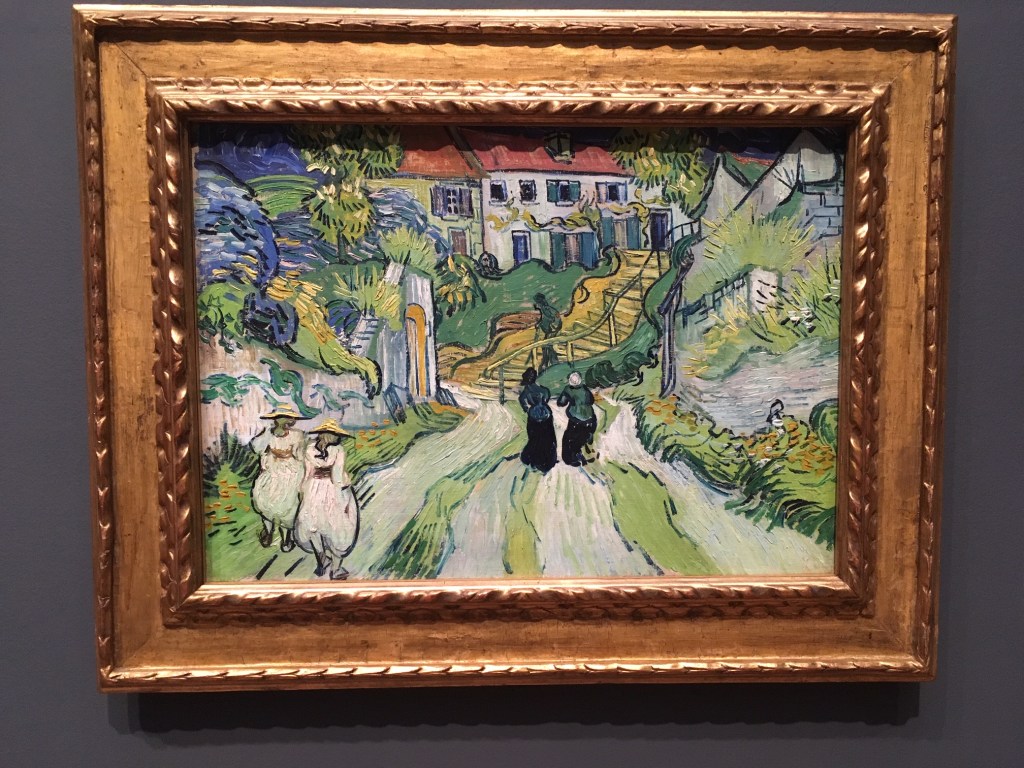
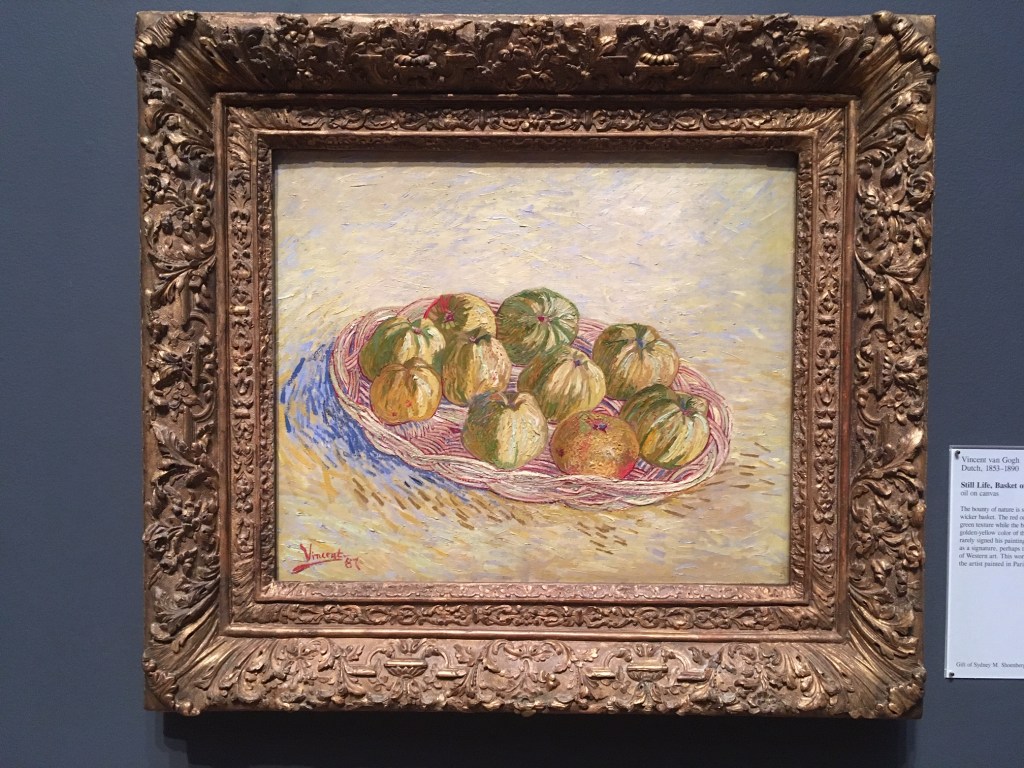
Great art is a gift from one soul to another.
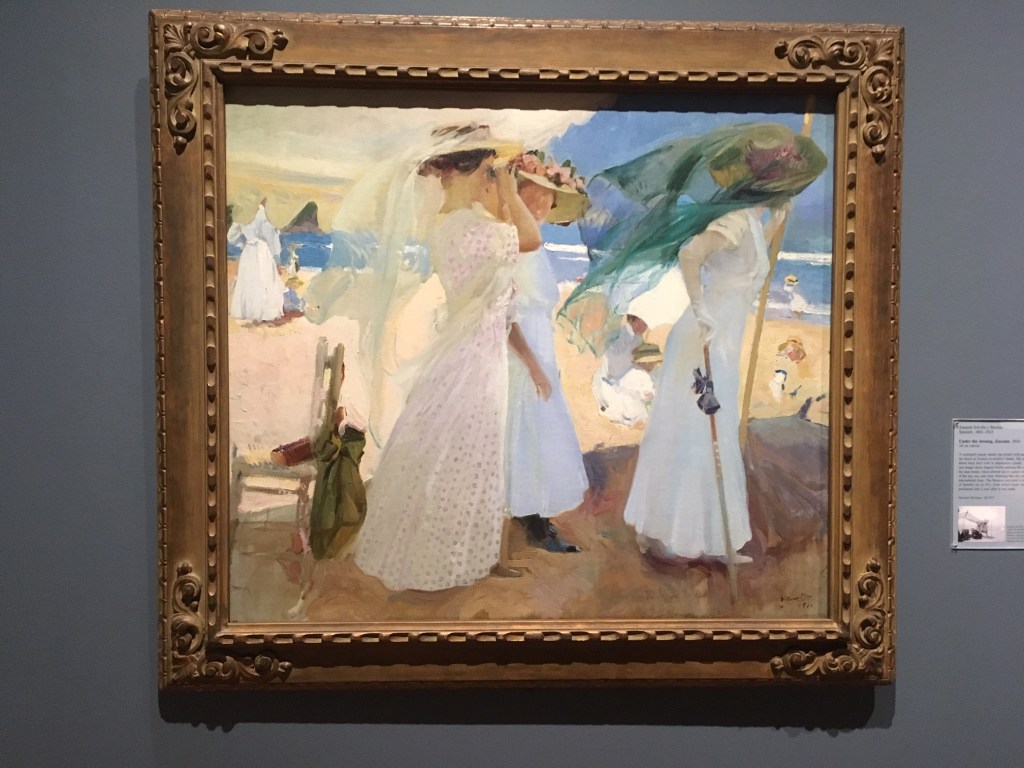
Hours later, when we finally left, we agreed that the spiritual and intellectual invigoration we experienced in our visit was a much needed blessing and we were grateful for it.
That was part one of our excursion to the big city.
Part 2 continues with our time at the Missouri Botanical Gardens.
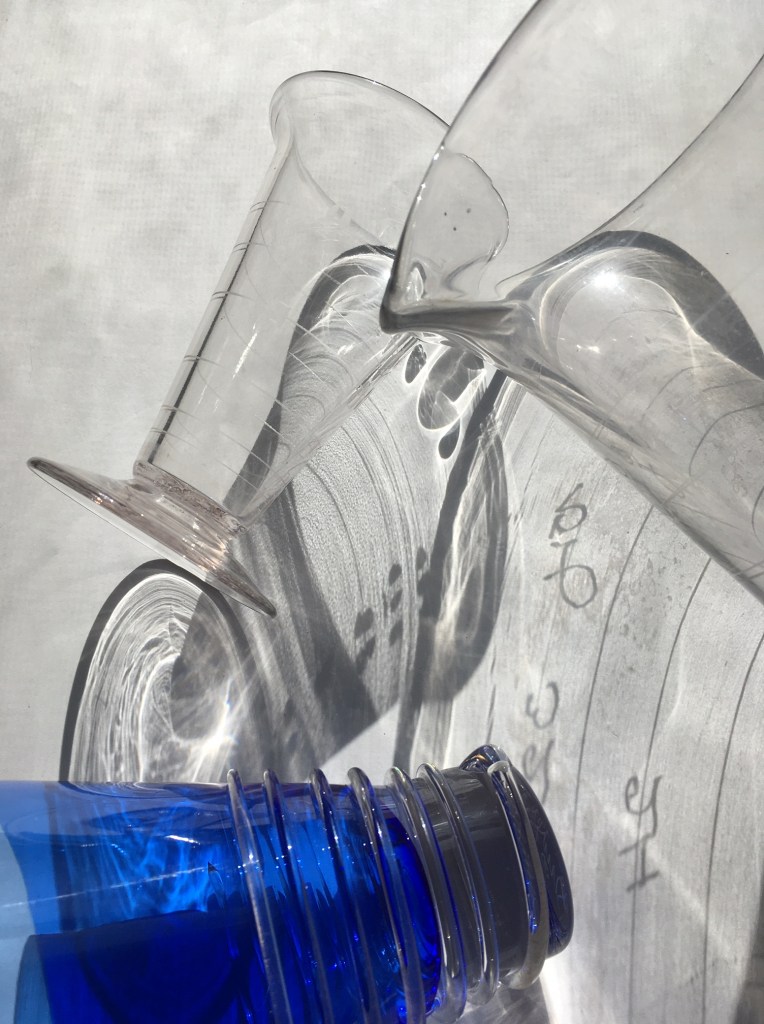


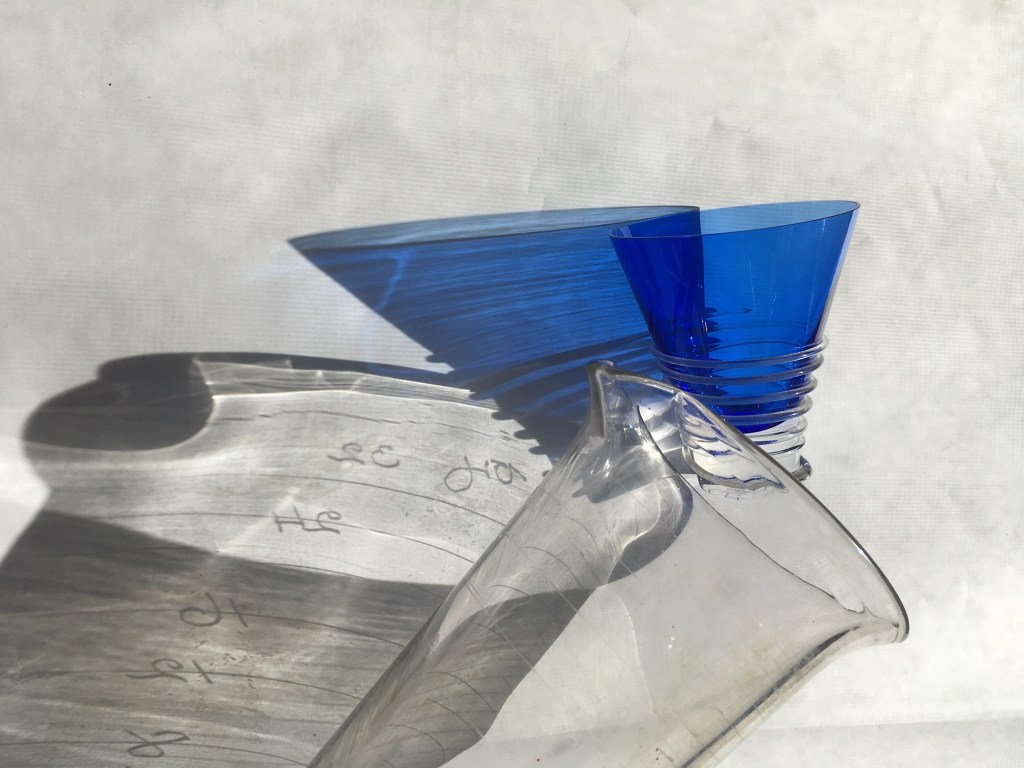
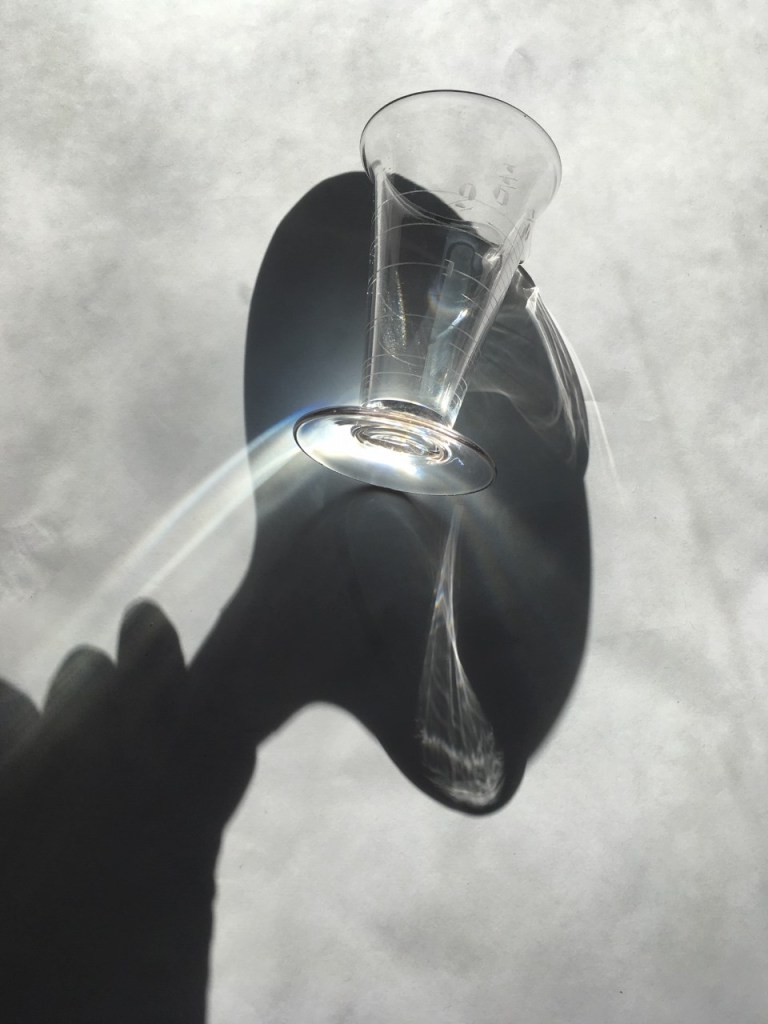
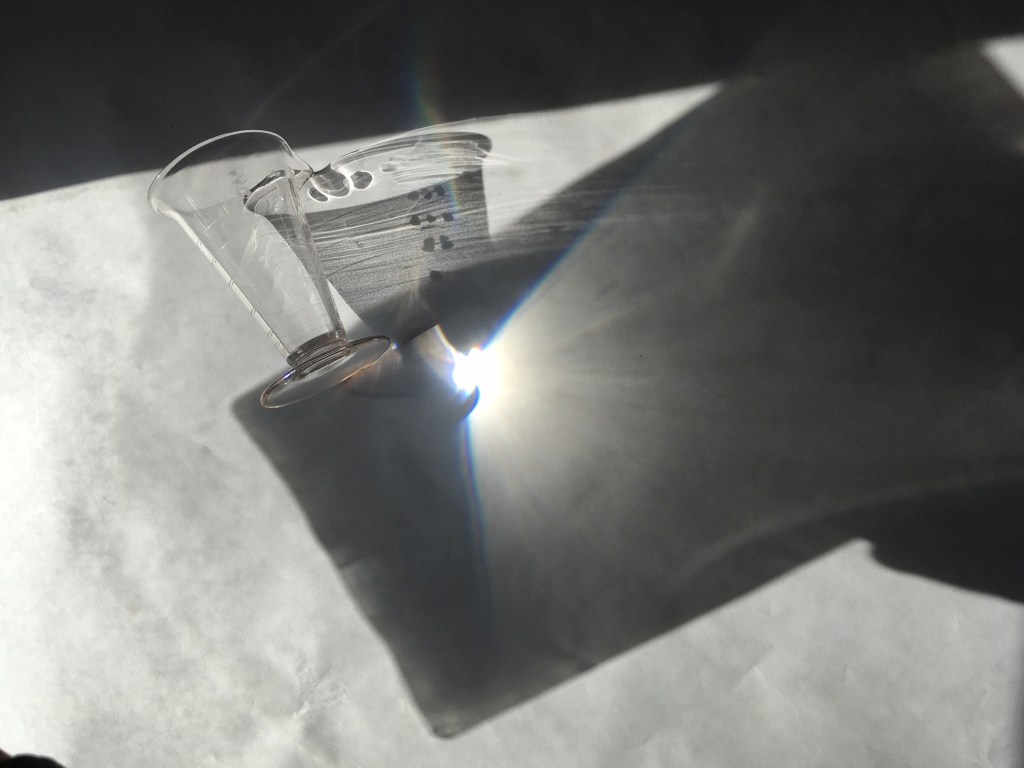
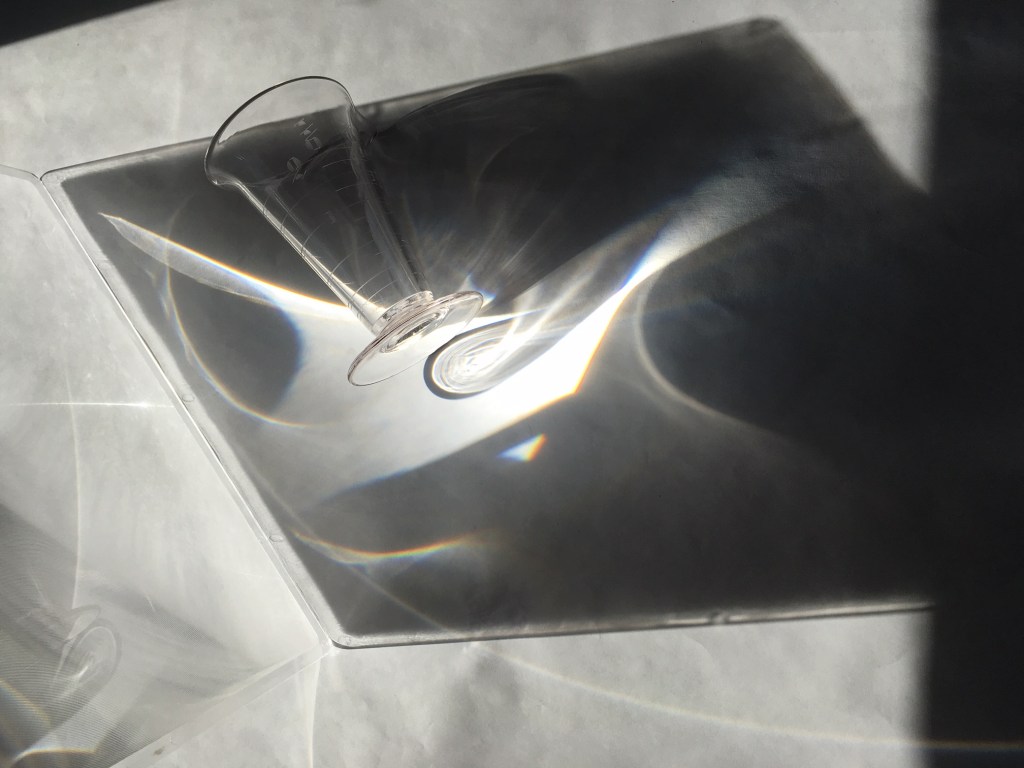
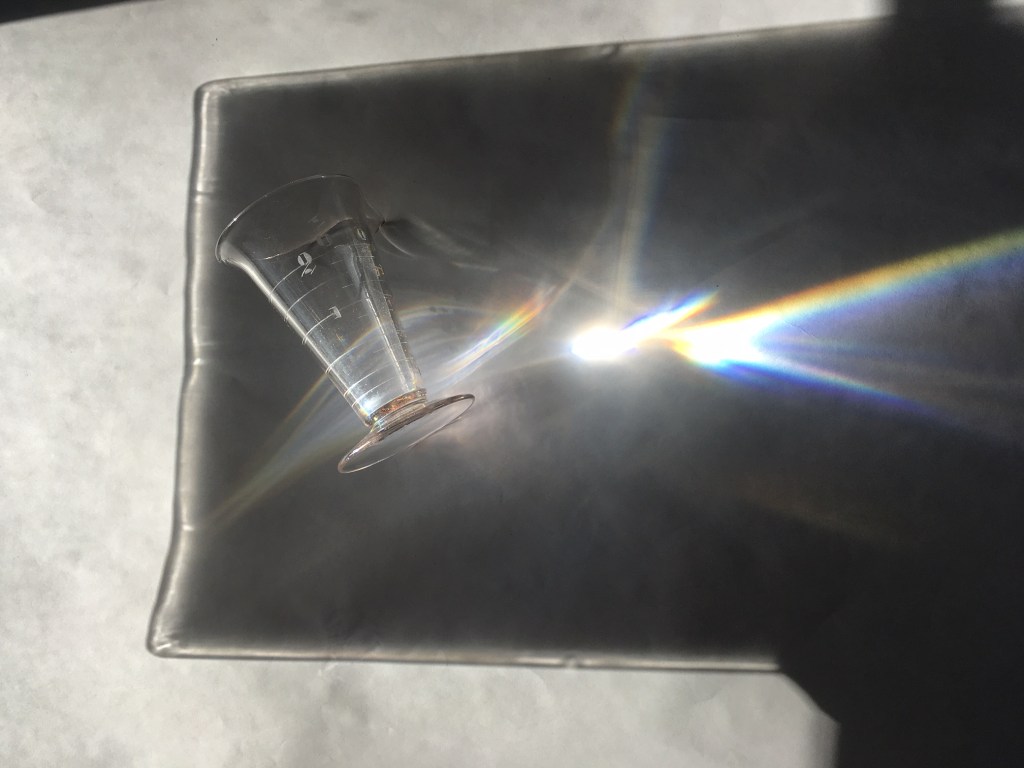
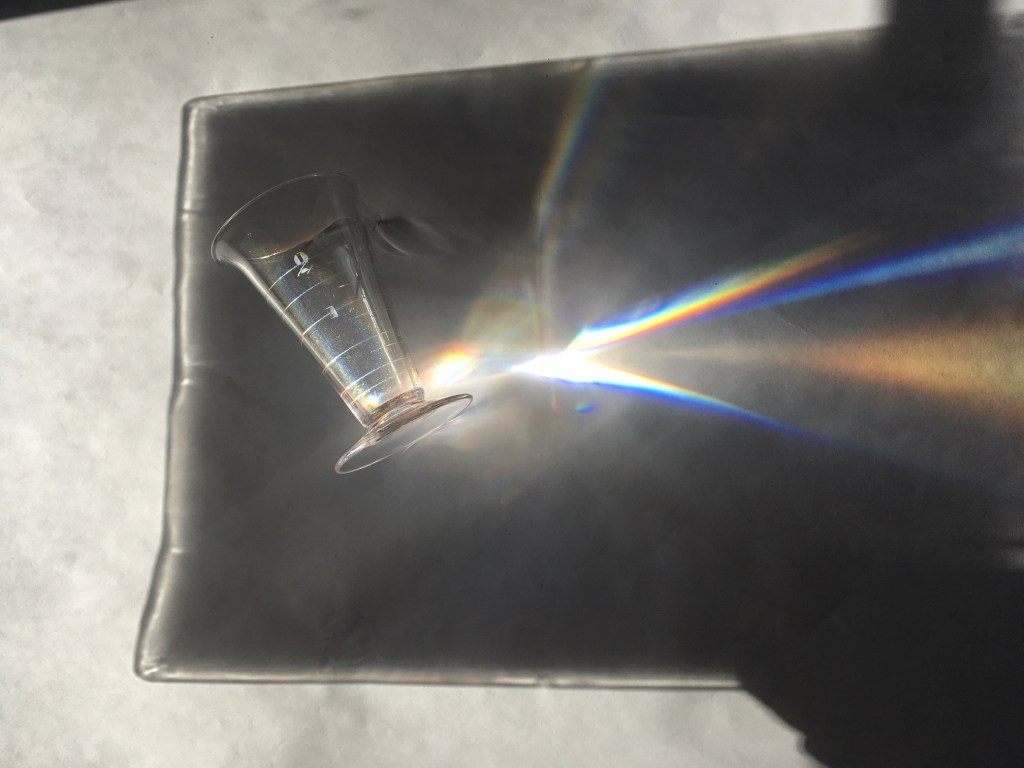
On my way past the dinning room table the midday sun was shining on the curtains. It had a neat celestial look to it which reminded me of the Northern Lights in fast motion. I decided to capture the moment on my Iphone and share it with you.

 Prairie Beacon