In the previous stamp of the week post I wrote about growing my knowledge of the printing process by working on a deep collection for just one issue.
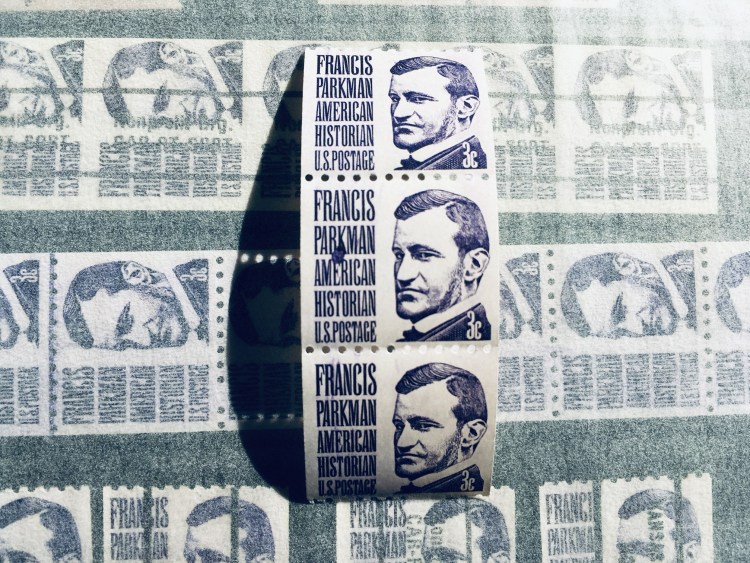
Well, it did not take long for my collector mentality to take that over. Now I have expanded beyond the Francis Parkman 3 cent and have decided to collect errors for the entire Prominent American Series, which the Francis Parkman is a part of.
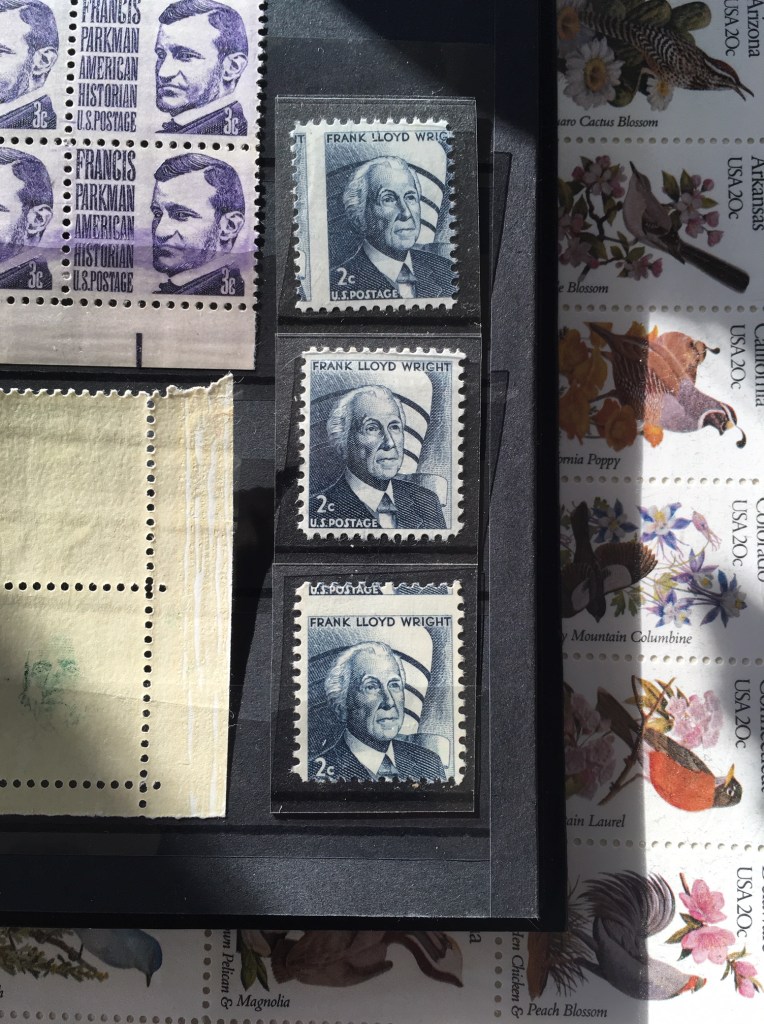
Pictured above is my first acquisition in that endeavor; the 2 cent Frank Lloyd Wright. Two nice examples of mis-perferation, horizontally and vertically. They were reasonable priced too!
This stamp was issued on June 8, 1966 in Spring Green Wisconsin. The Bureau of Printing and Engraving produced it on a rotary press. It is tagged and has shiny gum.
An anonymous comment I found on the web states the following – This stamp was designed by the staff of the Frank Lloyd Wright Foundation. The portrait, based on a 1952 photograph by Blackstone-Shelburne, New York City, was drawn by Patricia Amarantides and Ling Po. The Solomon R. Guggenheim Museum in the background was also drawn by Ling Po. Lettering is by Vernon Swayback and technical revisions by John Amarantides. Howard C. Mildner and Arthur W. Dintaman of the Bureau of Engraving and Printing engraved the vignette, and Kenneth C, Wiram engraved the lettering.
If anyone knows how many of these stamps where printed, let me know.
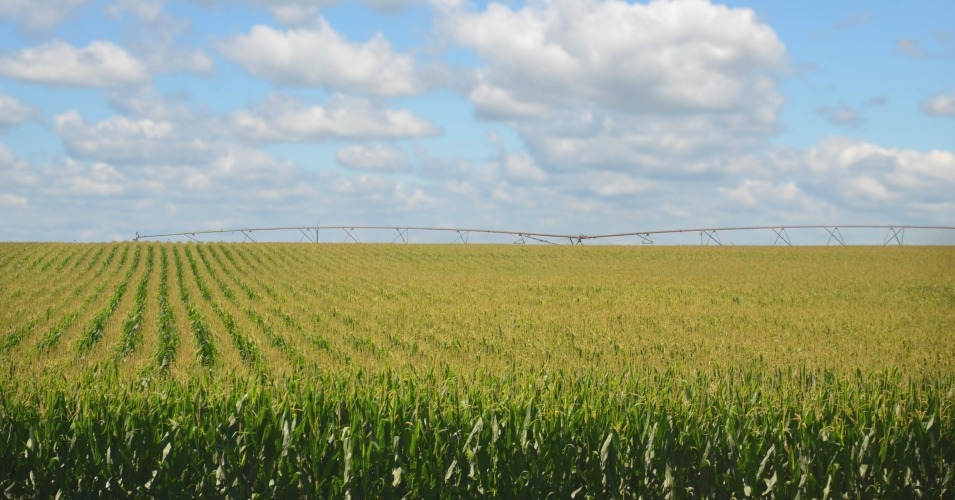
When I moved to central Illinois, I found the landscape interesting. But that interest only lasted a short time. After I drove over it, biked over it, and flew over it, I discovered that lakes, streams, hills and woods were few and far between. It was miles of empty monotony in winter and rows of green corn plants walling me in all summer long. I began to despise its flat and homogeneous character.
To look at it on my days off was like eating a boiled potato with nothing on it.
My hometown of New York was and is no boiled potato.
For all my time back home, I was fascinated with the landscape. I draw inspiration from its varied character, its history. The treasures, big and small, I found under it, on it, and above it was a daily epiphany. No two miles were the same.
At the time of my grim discovery I began to regret my move. Most of my friends and family told me I would. More and more, I found myself brooding under emotionally gray skies.
How could I have left behind biking along the Hudson River or weekends on the Shungum Ridge, hiking from one sparkling lake to another, atop a mighty wall of white stone a thousand feet tall?
How could I willingly forgo the surf of the Atlantic Ocean tumbling on the white sandy beaches of Long Island and New Jersey?
I can smell the salt water, and the sun tan lotion right here at my desk, 950 miles away.
This was coveted time to rejuvenate my soul in God’s other house of worship, and I willingly gave it up.
Here in central Illinois, driving on my day off through those mind-numbing miles of cash crops to hike in a few hundred acres of woods or fish off the crumbling banks of some rehabbed strip mine was not giving up any treasures to rejuvenate my soul.
Finally, before all hope was lost, I realized the flat tedium of this new landscape had countless small treasures hiding right out in the open.
It is the winged carnivores that I speak of. Death from above for Mr. Rabbit, but winged saviors for the ‘exiled’ New York chef.
The stately Cicus cyaneus. The tenacious Accipiter cooperii. The ubiquitous Buteo lineatus,Buteo platypterus and Buteo jamaicendid. The largest, most majestic winged carnivore to cast a shadow across the flatdome of the Archipelago of Central Illinois, Haliaeetus leucocephalus.
These could have been the names of fearless commanders that lead great armies in ancient times, or mighty winged gods from prehistoric legends.
Little by little, here and there, I saw them. Eventually, I realized that they were doing the most incredible things all around me, while I was complaining the landscape had no inspiration. So I kept an eye out for them.
I recall an early encounter that was like a showcase, a veritable preview of what was out there.
One morning I was driving down Interstate 74 after a snowfall. The mercury had dipped down below freezing and the morning sun was not moving it much. The fallowed fields of corn were covered in snow that the wind had sculpted into long winding ridges and curving shoals over the straight rows of corn stubble running to the horizon. In the distance, beyond the fields, there was a grain elevator, shimmering silver in the blue haze where cloudless sky and empty landscape met. Pretty for a moment’s view but no replacement for the skyline of Manhattan.
Along the interstate there was a line of fence posts a few miles long. It seemed that every fifth or sixth post was crowned with a Buteo lineatus – red-shouldered hawk – and Buteo jamaicensis – red-tailed hawk.
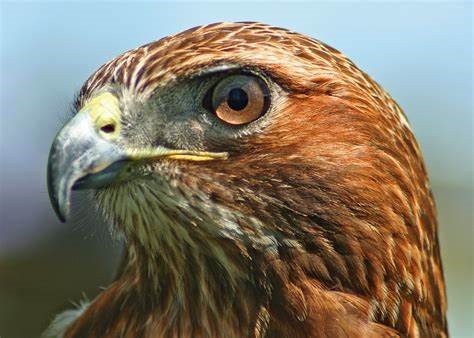
From a distance they had the look of the plastic bird statue used to scare off pigeons. When I drove past, I quickly saw their unique character. Each bird had shoulders slightly hunched that gave their stance a pensive look. Each head had a powerful, weapon like beak and large eyes looking off into the distance, which made me believe they could count the whiskers on a rabbit a half mile away. Their ample plumage was a pattern of rich, earthy tones, and I imagined them wearing thick woolen coats of the finest and richest weave as they sat motionless in the icy wind, their powerful claws dug into the weathered wood of the posts.
These birds were big, brawny, and had a commanding presence, unlike the social little birds elbowing one another for a place to eat at the feeder outside my dining room window. For the rest of the ride I was content counting how many I saw, the variations in their colors, and musing on what it was like to live out on that barren, windswept landscape. These creatures were the epitome of self-reliance.
Hawk watching really got exciting when I spotted the Accipiter cooperii – cooper’s hawk – during a lunchtime walk.
I had just made the usual turn off my street and headed for the Bradley campus. At the edge of my neighbor’s backyard is a big, round bush. That day, it was filled with birds that were making an incredible racket. As I approached, I noticed a crow sized bird, perched on the top of a weathered telephone pole, across the street. Its wing feathers were colored in a rich grey with a tint of lavender. It was sitting there, staring obsessively at the bush. Occasionally it would adjust its wings or lean forward only to return to its original position of intense watching. I had glimpsed this bird a few times as it flew up and down my street. One time, it darted into the thick cover of the blue spruce on my mom’s front lawn. I never thought much about the bird, only that it was larger then most I had seen around. But that day I saw the shape of the head, the beak and the large eyes with that intense gaze. It was a breed of hawk I did not know of and I made a mental note to look it up in the bird book.
Twenty minutes later, on the way back to my house, it was still perched on the pole. But this time it looked agitated. Repeatedly, it leaned forward and spread its wings, as it was about to take flight, only to fold them back up, look around and call out in its shrill voice.
The birds in the big round bush were still frantic, tweeting and flying in and out.
I stopped a few yards from the bush and watched the guy up on the pole, the commotion in the bush. Something interesting was definitely going to happen.
Then the hawk opened its wings, pushed off its perch and dove across the street.
It was headed straight for the bush.
A few feet above the shrub it did the most amazing thing I have ever seen an animal do. From its full speed dive, it stopped in the air. For a few seconds it just hovered above the branches. The only part of it that moved was its head as it scanned from left to right the object below it. Then, with a few small movements of its wings, it turned its body perpendicular to the curved top of the plant, and continued its dive, deep into the branches and the frantic birds.
I can still see that moment in my mind. For two seconds this magnificent creature had complete mastery over the air, gravity and every aspect of its own physicality, its perfect engineering! I was stunned, awestruck as I stood on the sidewalk staring.
Then it did the second most amazing thing I had ever seen an animal do. When it was hunting for the birds, it was using its legs and claws like arms and hands! With one leg it moved branches out of its way and with the other it was grabbing for the sparrows. I am not sure how it kept itself from falling out of the bush since its wings were almost useless in the dense tangle of branches. For a minute or two it was moving through the branches with incredible ease, as it hunted the little birds.
Miraculously, all the sparrows escaped. When they did, the hawk let out a screeching call and zoomed off out of the bush. In seconds it was gone through the leafy crowns of the big oak trees and the rooftops of the old houses.
Outside of town, on Interstate 74, there were other treasures to be found on the wide-open plains of the Archipelago. Two as a matter of fact. Both, I happened to come across over the summer. I use that phrase because I don’t go out looking for these birds, our paths just happen to cross now and again. I like that pattern. Since you are not expecting to see their incredible skills in action, it makes it more of a wonder when you do, especially when you are driving for work and thinking through a list of problems you have to get done by the end of the day. It lifts you up and out from between the heavy wheels of the daily grind.
The first was a small treasure. A display of aerial excellence I had just a moment to watch as I was driving along. Fortunately, it was a longish moment, I was slowing down for my exit.
Near the edge of the road there was something motionless in the air 20, or 30 feet above the ground. It was a hawk. Its big wings were fully extended, the feathers on the tips spread out like fingers reaching through the air. These wings pushed against an invisible river of moving air and kept the bird motionless as it scanned the ground below. This wind was strong enough to put the branches of a nearby tree in violent motion. Is there any machine of man’s making that can remain on the wind like that, completely silent and without moving an inch in any direction?
Thinking that it had spotted something to eat, I quickly scanned the field below it. There, about five yards out was a small dark form scurrying here and there on the long, flattened blades of light colored grass. That small, dark form had no idea what watched in the air above.
The second small treasure took place in a shorter space of time. Literally, five or six seconds because I was driving 70 mph east bound on Route 74.
Against the blue sky is a bird, dazzling white, that zooms down from above, then banks to the left, and zips across the front of my car. It was five or six feet off the pavement and just a few yards from my front grill. In seconds it had sped across the two east bound lanes, the median and the two west bound lanes before it was gone over a barren field.
There was a semi speeding down the west bound lane and the bird shot out across the front of it, avoiding it with ease.
When it came out of that dive it’s white under side was facing me. The shape of the bird’s body resembled a bullet or a sleek, airborne projectile. The wings were rounded and swept back; its tail splayed straight and wide. The legs were pulled in tight against itself. The head was turned to one side, it was looking into the direction of the on-coming traffic in the opposite lane – the space it was going to fly through next. Its facial expression was on full display – commanding, purposeful and utterly fearless.
To avoid my car, and the semi 100 feet or so ahead of me in the far opposite lane, it had to been flying at a tremendous rate of speed. If you include both shoulders, four lanes and the median, Interstate 74 is a minimum of 116 feet wide. The far edge of the semi was about 86 feet from where the bird came out of the dive. If my car and the semi are traveling at 70 mph we would have been covering .0194 feet a second. The bird may have been diving at 120mph, a speed it could easily achieve I have been told, and continued on at 100 mph when it leveled off. At 100 mph it would take .586 seconds to fly 86’ feet It would only spend .082 seconds in the width of one lane. If it flew past my car at a distance of 30 feet away, my car would have taken .292 seconds to reach it. If it flew past the truck at a distance of 100 feet away, it would be .974 seconds before the truck reached the bird. Seems to me it had just enough time to fly safely across the interstate.
It also seems to me that the hawk had figured out the precise timing needed for this exhibition of aerial excellence.
Why do I assume to know what a hawk is thinking?
Well, in my twelve years of driving on the interstates of Illinois, I can recall seeing only two or three hawks that had been struck by a vehicle. This is a stunningly good statistic; which chance alone could not be responsible for.
I am thankful that my interest in these creatures has deepened over the years. They have taught me, once again, that the extraordinary can be found in the ordinary no matter where you are. The key to finding these treasures is to keep the mind open, soften the heart, and practice patience. Even when your world looks barren, boring and bleak, persevere. Do those three things and you will always be reminded of the miracle that life is, and you will always be amazed.
If I was cooking in Villa Santa Maria on a snowy night like this, Minestrone soup would be simmering on my stove. This is a photo of Villa Santa Maria, the town my grandfather lived in before he came to America in 1910 or so. He probably cooked this same soup there on a night like this.
Enrico gave this recipe to my mother and she handed it down to me when I was in cooking school back in 1982. When I opened my restaurant, Dominic’s in 1995, it went on the menu to honor my mother and my grandfather.
When my mom made this for us she often added cannelloni beans or ditalini pasta, sometimes not.
No matter, it was a family favorite and a favorite at Dominic’s too.
I hope you enjoy it.
Happy cooking!
1.75lbs Onion, Large dice
.5 lbs Celery, Large dice
.4 lbs Carrots, Large dice
1 lbs Green Cabbage, Julienne
1 oz Garlic, Chopped large
8 oz. Red Bell Peppers, Large dice
2 cups, Canned tomatoes, Peeled in juice, drained
8 strips, Bacon, Chopped
1 cup, White wine, Dry
4 oz, Tomato paste
10 oz, Olive oil
42 oz, Chicken Stock
.5 cups, Parsley, Chopped
.5 table spoon, Basil, dry
.5 table spoon, Rosemary, fresh, Chopped
Salt & Pepper To taste
Chop the canned tomatoes.
In large pot, on a high flame, brown the bacon and garlic in the olive oil. Stir frequently.
Lower the flame to medium high and add all vegetables except cabbage. Saute until onions are translucent. Stir frequently.
Add the stock and bring to a low boil then turn down the flame and keep on a simmer for about twenty minutes or until the vegetables are soft but still firm. Just a few bubbles breaking the surface of the soup is where you want it to be.
Use a separate pan and lightly saute the cabbage in a small amount of olive oil. Mix frequently so it does not burn. When done, add it to the soup, before it boils.
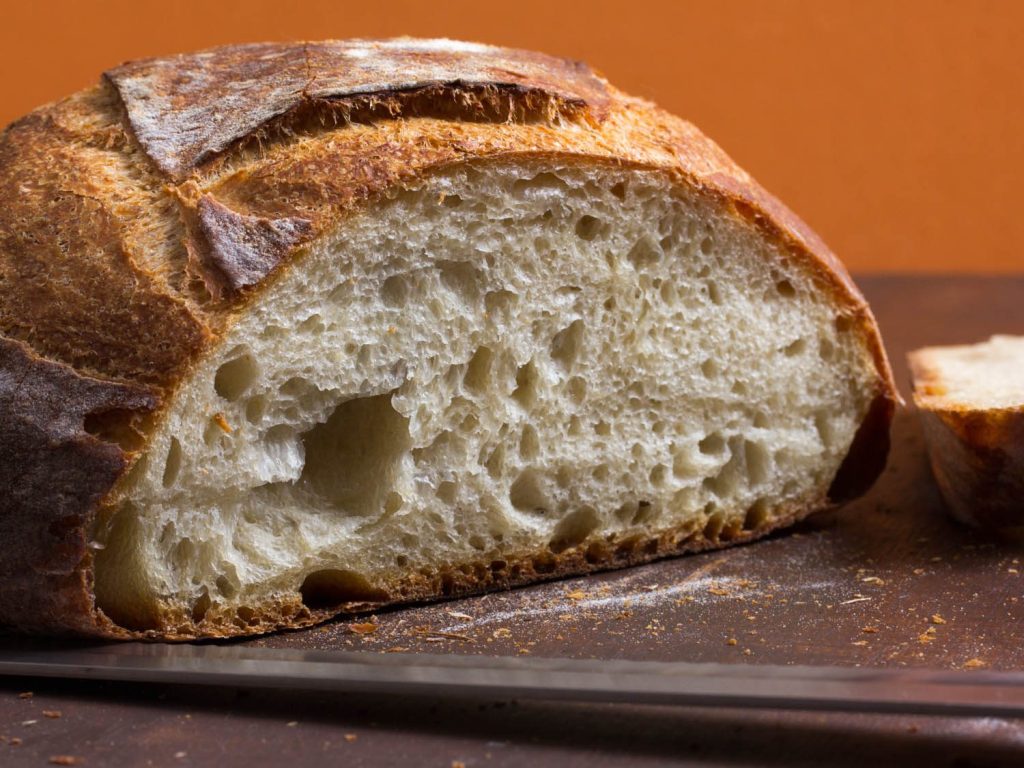
Add salt and black pepper to taste. If you want to make a lite meal of this, serve with a thick slice of toasted Italian bread.
I was talking to my Aunt Florence on the phone recently and the subject of her husband’s singing voice came up.
Since I was a kid the family was always impressed with his singing. They would talk about Frank’s voice like they would talk about Perry Como or Dean Martin’s voice.
However, I never heard him sing.
Some time in the 1980’s he sang a few songs at a family wedding but I was not able to attend.
When I told my aunt this she said an old recording of him singing Smile was posted on You Tube. She said is was not the best quality recording but it got the point across.
When I got off the phone I found that recording and listened to it.
I was amazed. I just never thought he had could sing that well!
My aunt also told me that Frank’s brother Carmen played the saxophone on that recording.
I was doubly impressed.
Now for your listening pleasure, Frank Leggio singing his rendition of Smile.
In the archipelago, summer has packed up and left for the warming climes of Argentina. We are left with the scent of spiced apple cider and bonfire smoke drifting through the backyards as colored leaves falling from the trees. It is a great time of the year for a hike in the woods and listening to a favorite jazz album while lazing on the couch wrapped up in a warm wool blanket. Maybe a single malt is close at hand and a small fire crackling on the hearth.
To celebrate my favorite season I put together a list of jazz album that after years of listening to them are as fresh now as the day I first put them on the turntable.
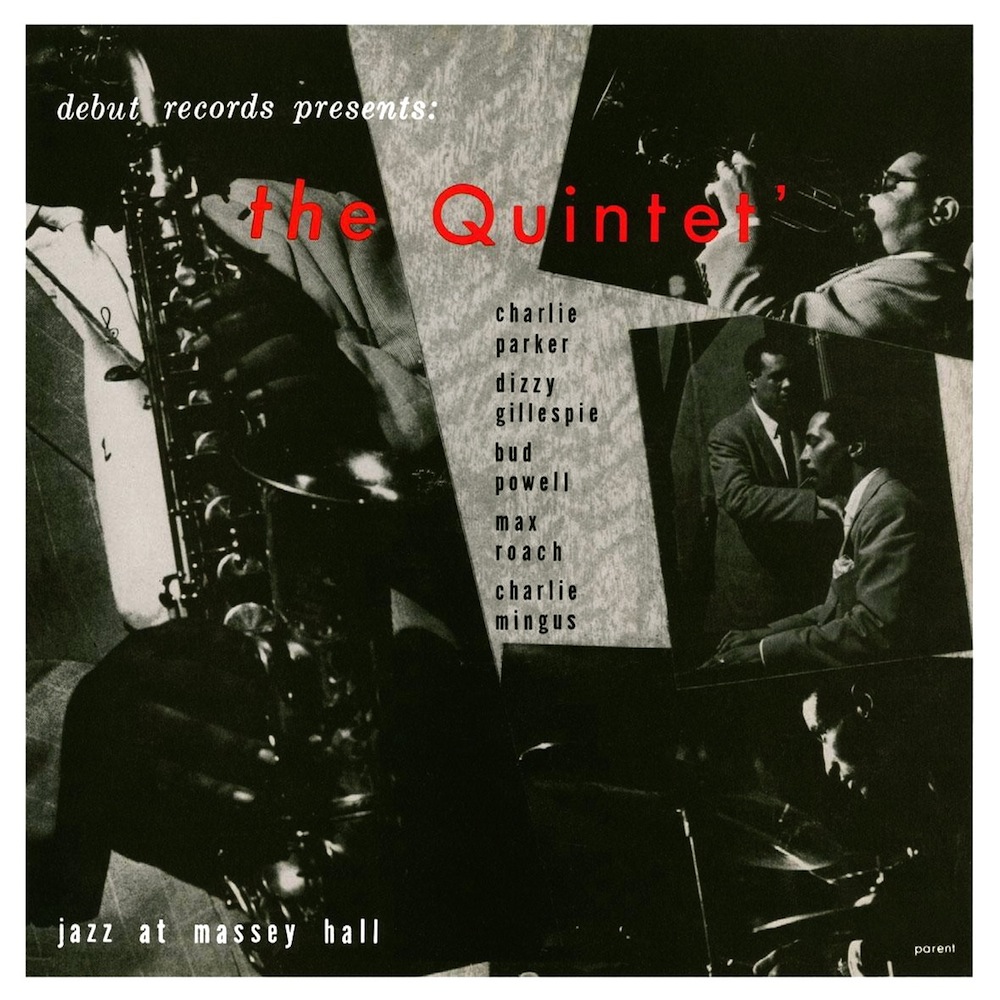
My first pick here is Jazz at Massey Hall. This is not a ground breaking Bebop Statement that so many of Charlie Parker and Dizzy’s records seem to me. It is a musical conversations recorded between a group of jazz giants and one of my favorites. There is an energy as well as a musical interaction that reminds me of the sales meetings I attend at for my work.
Good salesman are a gregarious and witty bunch. They love to show that off, compete with one another for attentions but also contribute their wisdom of the trade to raise the level of conversation and what they can accomplish. This album is all that but in musical form. Been loving it for years.
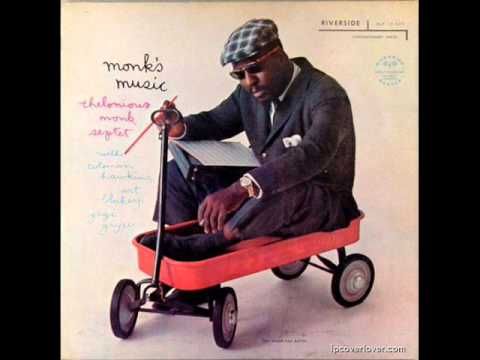
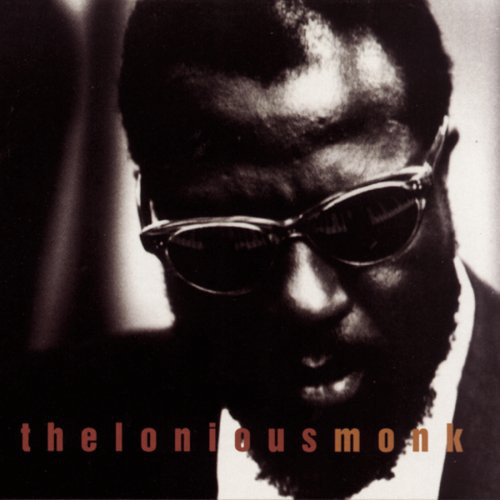
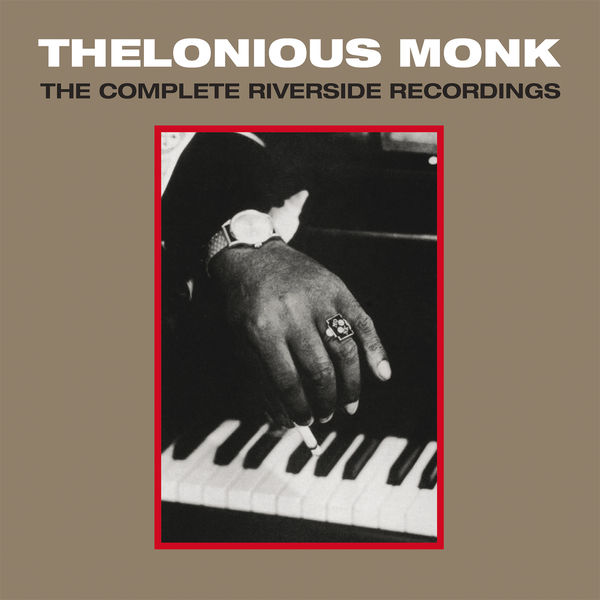
Next up is Thelonious Monk. This native New Yorker’s music is angular, off centered and deeply emotional. To understand Monk’s music is to experiences it as if confronted by a sonic force of nature which is accompanied by a rhythm section and a strange pattern of dissonant chords that somehow holds together as music.
I cannot begin to tell you how many Monk CDs I own, that’s because I am not sure myself. But I can tell you that the complete Riverside recordings, which my darling wife gave to me one Christmas a long time ago, is my favorite deep well of Monk inspiration.
I once read a piece by a famous critic that wrote how Monk, in his later years, had achieved wealth and fame and therefore became a sell out. He exchanged his art for money and ended up a parody of himself as a musician. He cited Monk’s years with Columbia as an example of that disappointment.
But that depends on how you listen to those albums. Unlike his early days, Monk was no longer searching for his voice. In my opinion he had finally found the band that could follow him, that internalized his musical ethos and supported him in a way that sounded Monk-like. Because of that his sound became complete and he turned to refining the musical language he had created in his youth. Actually, these recordings could be the most concise and developed statements of his musical thinking.
Obviously, I don’t agree with this critic’s thinking when he equated searching with creating as an absolute. He was more concerned with appreciating and studying Monk’s creative process then the absolute joy of being immersed in his quirky sonic universe. He should have recognized that before labeling those perfectly great recordings as sell out seconds, not fit for the bargain bin at the Dollar General or the Pound Stretcher.
Some songs and musicians evoke a mood through their music. The next two albums evoke an entire culture for me. An urban culture in a city named New York, during the nineteen forties and nineteen fifties.
This music was recorded before I was around, so the cultures they depict are really personalized legends that I have constructed over time. But that is the magic of great art, it moves the mind to comprehend and internalize over time what ever the artist created as it’s essence.
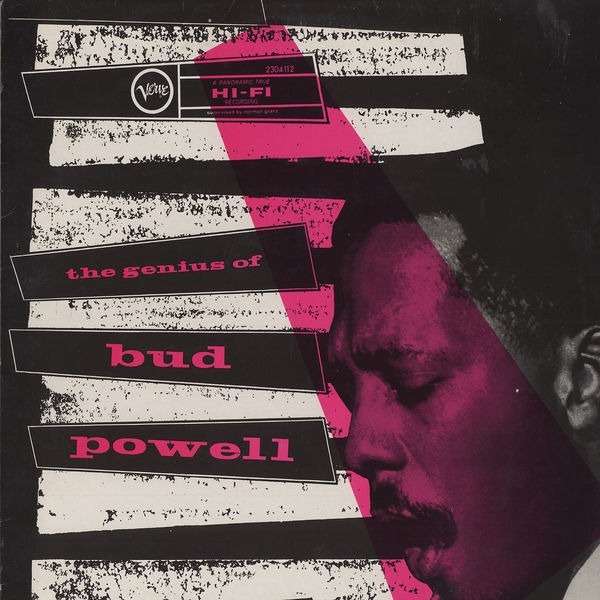
Bud Powell’s master piece is my time machine to the uptown Manhattan of the late forties early fifties: 52nd street is slick with a dirty rain and the neon lights of the club marquees splash their harsh glow down the pavement. The big yellow cab dropped me and Ruby off in front of the 3 deuces. At the front door I can hear Bud racing through an electrified rendition of Tea for Two. I throw the stub of my Lucky Strike to the pavement and rummage around in the pocket of my trench coat for the deuce to tip the doorman and get the usual table and a French 75…
Now fast forward to the mid late 1950’s and Red Garland’s Monteca. This album catches the essences of modern, mainstream jazz as I have come to know it. Red’s straight forward piano playing can sound deceptively simple but its often lite and always streamlined quality make it thoroughly modern. If I could build a room to listening to Garland’s music it would look like this – white walls, polished wooden floors with a view of the Hudson River. Comfortable in dimensions it would be sparsely appointed with a few plywood molded chairs, a Bauhaus mid century modern sofa between them. A large Gomez painting hung on the wall over the couch and in front of it a very modern area rug. Oh, and a young Grace Kelly sitting on one end of that sofa handing me a dry martini!
As evidenced by the album’s title, Monteca, the cuts have an Afro-Cuban flavor with Ray Beretto’s percussion. So, the final touch to the Garland pad would be the faint aroma of fried plantains and Cuban pork wafting in through an open window from Little Havana down the block.
Of course there are scores more that can easily make this list but I have to stop somewhere. There will definitely be another tally of personal favorites in the future.
Writing the previous Election Day post left a thought rattling around in my head. That thought would not go away, but it would not stay in one place long enough for me to see it clearly.
A few days into this situation, I drove out from the Archipelago to a job site that was 154 miles away. I left the house before the sun came up and headed out on interstate 74 into the fields of corn, brittle and brown from the cool autumn weather. Somewhere around mile 100 I pinned down that evasive thought and put it into words.
The past is the foundation of the future we are building on today.
This was the unconscious motivation for my writing of that original post. It is the deeper view in which I saw the months leading up to the election, the election itself and the urgency I felt about commenting on it.
Pointing out the imperative need to understand and appreciate the Declaration of Independence, the Constitution and Thomas Payne’s Common Sense was not enough.
These documents had to be placed in their original social and historical context to be fully appreciated. Edmund S. Morgan’s The Birth of the Republic 1763-89 did this like no other book I have read on that period in our history.
Morgan puts the reader squarely in the middle of the struggle for freedom. He depicts the lifestyle the colonialist enjoyed, how England tried to change that lifestyle, and how the colonialist reacted to it and why.
Morgan’s writing style is clear and concise. His scholarship focused on trying to recreate what actually happened, not revising events to fit a personal or political narrative. In our day and age, this has become a historian’s greatest service. It is a joy to read one who understands this.
If you need to deepen your understanding of the context of our founding, this is a must read. It will surely enrich your understanding of our principles, our traditions and our unique place in history as the light of liberty for one nation and the entire world.
Check out the Cucina Vendutas page. I added a mushroom recipe that got rave reviews when I offered is as the soup of the day at my old restaurant, Dominic’s.
It is easy to make and perfect to eat on a cold autumn night!






















 Prairie Beacon