When I started this website I said I would not write about politics. I wanted this to be a place to escape the daily grind. A digital space for visitors to enjoy and take a piece of that enjoyment with them when they left. However, with so many groups working to thoroughly transform, our government, culture and economy for the worse, I have to make an acceptation.
My aim is not to convince you to vote for one party over another, or one candidate over another. My aim is to convince you to do two things before you vote.
Read Thomas Paine’s Common Sense. Then read the Declaration of Independence and the Constitution of the United States.
Read them for yourself, not someone else’s interpretation of them. Read each one in it’s entirety, several times if need be. They are very important.
Our country was founded on these documents. They contain political wisdom that transcends the ages. The truths these men wrote of are as profound and relevant now as they were in the 1700’s. They must be understood, cherished and defended, now more then ever.
Wisdom and truth never goes out of fashion, never becomes obsolete.
The truths here are very simple. 1) Each human life is sacred and must be treated with respect. 2) The power to rule is a corrupting force that must be limited in it’s reach and used with discretion.
To embrace these truths, and put them into action, is to live free and prosper.
Thomas Paine rightly believed that power should never be concentrated in the hands of the government, or any institution or individual for that matter, because it leads to the abuse of human life. The higher the concentration of power the greater the opportunity for the abuse of the individual.
The Declaration of Independence gives specific examples of the abuses that arise from the concentration of political power and why they should be viewed as injurious to the individual. This document affirms that we have rights and they are inherent in every person. They are not given by the government, but by ‘nature and nature’s god’. Therefore, they cannot be taken away by the government but must be defended by it.
The Constitution, and the Bill of Rights, gives instructions on how these inalienable rights can be protected through the structure of our federal governmental and it’s basic operation and obligations to the citizens.
In essences, these two documents allow every citizen to live his or her life in the United States without the undo interference of the federal government, the destructive actions of foreign powers, or anarchist groups from outside or within the county’s borders.
This political system put in place by the founding fathers is not perfect. No political system is perfect. However, some are better then others. The system that these brave and brilliant men risked their lives to set down is far greater and freer then any that has come before it. It has given more freedom to more people then any other in the history of the world. The civil war, fought to abolish slavery, and the four year struggle to defeat the Axis powers and free the world from their totalitarian grip of evil is proof of that fact.
There is no reason to be ashamed of this magnificent country but every reason to celebrate it.
The present struggle by many groups and organizations to fundamentally transform the system, even tearing it down completely, will only lead to tyranny for all but a chosen few. If you believe in liberty, equality, and prosperity, then the struggle is to support, defend and expand what the founders have created and established.
There is only one question to ask your self when you walk into the poling booth –
What candidate will further advance the principles embodied in the Deceleration of Independence and The United States Constitution?
This past year I spent some time thinking about how I could grow as a collector. I came to the conclusion that there are as many ways to do this as there are collectors. However, three ways in particular stuck in my mind: studying the printing process, studying the engraving process, and studying the history of the United States Postal System.
I started with number one. It had been a long time since I read about the printing of stamps and some of that knowledge was fading. Having my Scott’s catalog handy I started in on the front section that out lines the process of printing stamps.
After reading through the first article, my attention span wavered big time. Even though I have an interest in all things philatelic, technical articles on the subject can be dry reading. After eight hours of work on the computer for my day job, I need some excitement to keep me engaged.
When I read about the printing process, Scott’s, and other sources, gave examples of how the process could go wrong and what the term was for it. This gave me the solution I was looking for.
I decided to list these terms then find the stamp that exemplifies each term.
Mystic Stamps provides a nice over view on this topic: Freaks, Errors and Oddities
“Errors and freaks are stamps not prepared according to their design specifications and mistakenly released to the public. Errors are stamps which have mistakes in color, perforation or design. Freaks are stamps which show an inconsistency in their production.”
Oddities are stamps not covered under these two definitions.
Instead of just reading and committing to memory the concept of an ink blob, I would have the real life example of it on a stamp.
Seeing that stamp, right there on the end of the tweezers, with a dot of ink where it was not intended to be, would bring to mind the actual printing process that made it. I can imagine how the big Huck press operates as it runs at break neck speed printing tens of thousands of stamps a minute. In that whirl of rollers filling with ink, then transferring and imprinting the engraved image onto the paper speeding between them, one tiny drop of ink escapes from it’s place on the printing plate and lands on the stoic and stately portrait face of a famous American, giving one in ten million stamps an unintended birthmark.
As well as sparking my imagination, expanding my appreciation, and deepening my understanding of freaks, oddities and errors, it would start a new branch of my collection. Plenty of growth in the pages of the stock books and the pages of the collector’s mind.
In picking the stamp to work with, I decided to chose one from my early days of my collecting.
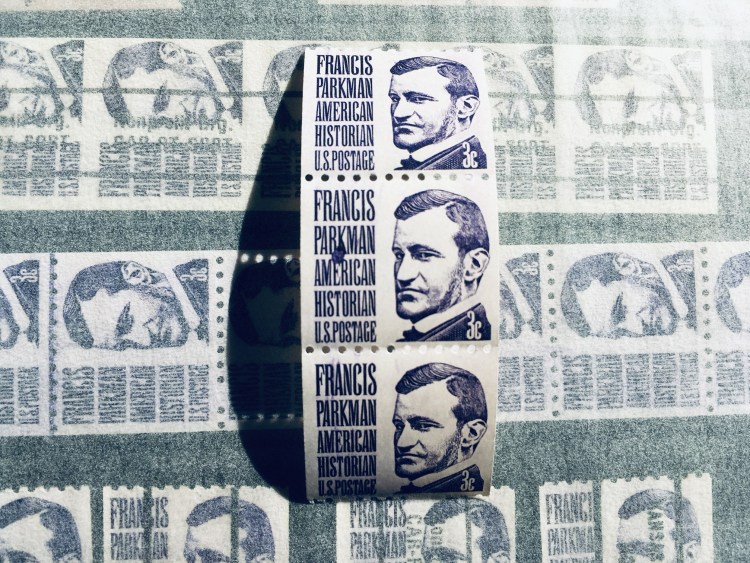
Some of the first stamps I acquired were from the Prominent Americans Series, 1965 – 1978. In that series the Francis Parkman 3-cent was the first one I bought at the post office in Bronxville, N.Y. At the time, I was not much taller then the counter at the window!
Here is what I have so far in my Francis Parkman sub-collection.
This is a nice example of an uneven concentration of ink on the printing plate, or, an ink blob. Unfortunately, it is not on Frances’ face but on his surname, and also on his first name in the lower stamp. There is a faint ink smear as well. This is a two-for-one error!
This plate block is good example of an ink smear which is produced from the same issue as the former error illustration. This issue seems to have had a lot of problems with over inking resulting in smears. However, blobs seem to much rarer an occurrence.
Cut shifts occur when the cutting process is shifted and the perforation falls inside the image of the stamp.
Here are two cut shifts, a vertical shift on the left and a horizontal shift on the right. Both stamps were printed in the sheet format, four panes comprising a full sheet with a horizontal gutter between the panes.
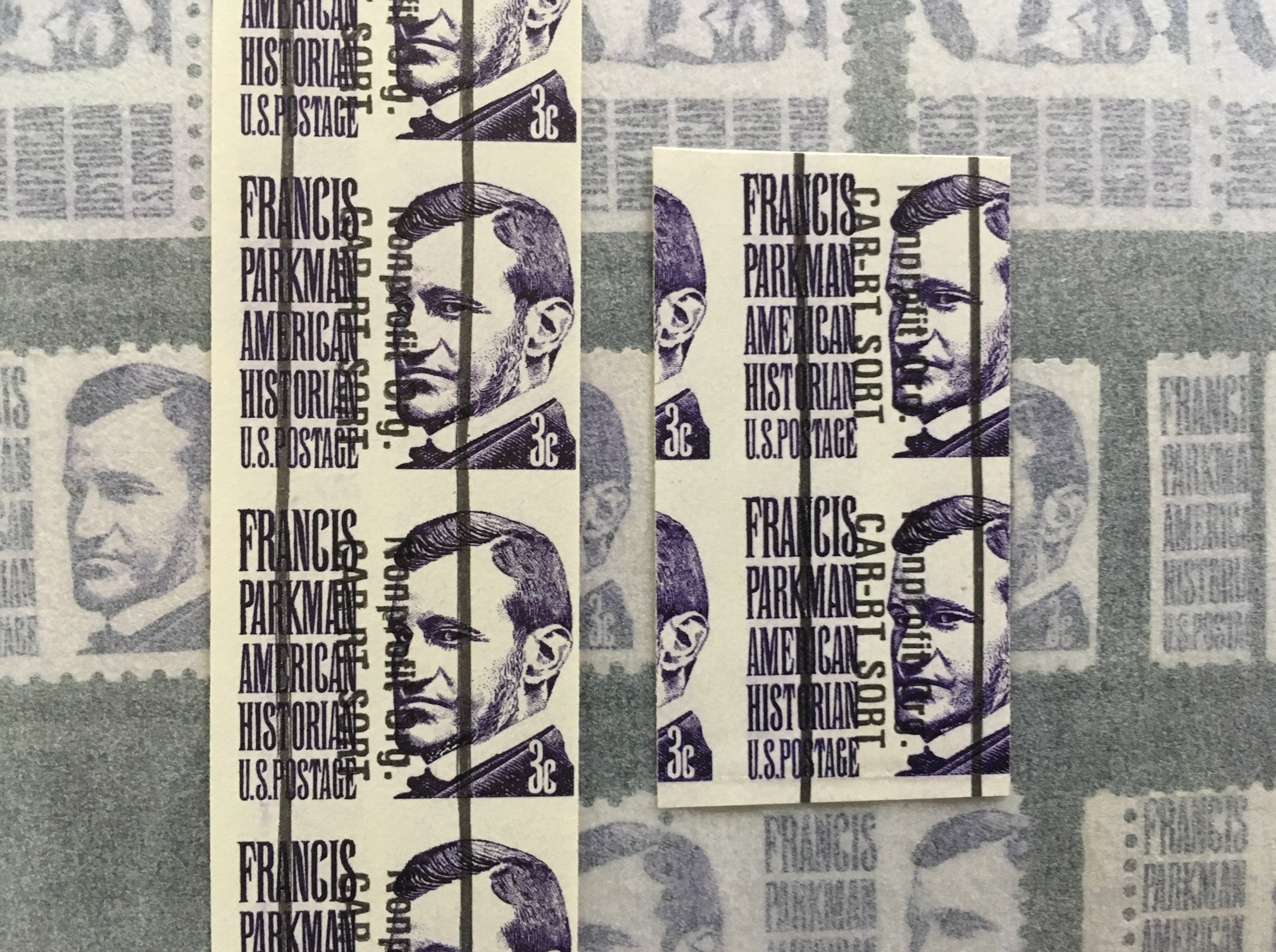
Here is another perforation error but on a coil stamp. These are excellent examples of the perforation step being omitted entirely. The term for that is in-perforation. The coils on the left are missing horizontal perforations. The example on the right has a cut shift as well, making it another two-for-one or a complex error. These two example have per-cancelations for use by not for profit organizations.
There are other terms describing these irregularities which I have yet to acquire. I have my eye on a paper fold errors but the price is slightly out of reach. If the seller was local I could offer a trade. Unfortunately, he is listed on eBay. Buying and selling on the internet has it’s pros and cons.
Interestingly enough, I have not found an error related to the engraving of the plate. No stamp with the denomination missing or Francis’s portrait facing the wrong direction or up side down.
But as time passes new opportunities arise for the diligent philatelist.
On a final note, this is a starting point in my philatelic journey. I still have a lot to collecting of examples and education on the finer points of freaks, errors, and oddities.
In our home, the dinning room is at the center of the activity. One reason for this is we all love to eat. Maybe on an unconscious level we are reliving all the good food we eat when we are sitting at the dining room table doing things other then eating. The memories of flavors have a power to shape our world and it is vastly under rated. If Helen of Troy’s beauty launched a thousand ships, Leda’s Baklava brought them all back.
There is an architectural reason for this too, the dining room is the central room of the building. We have to walk through it to get to any other part of the house. Once again, we are reminded of food as we go to other rooms to do other things.
No expectations of staying under fed in this old house.
The dining room is the family’s vault full of good memories. All the birthday parties, raucous times at dinners and celebrations on holidays have value no gold bar, no bank note can match. Even the hours of helping the kids with homework, sewing costumes for school plays, and filling out forms for field trips are now fondly recalled.
The mind rarely looks ahead and back in the same way. This room has taught me that. Now that the kids are in high school and collage, the dinning room is not as busy as it use to be. When they were toddlers and in grade school I wished that the dinning room had less traffic and that whirl of activity was up stairs out of sight. But now that it is nearly gone I miss it.
Now, many of the little moments I see there have the solitary feel of a still life. They no longer over flow with that confusion of amore di famiglia and chaotic joy they once did. But I am not sad about the change.
This room has taught me something else too.
Whether big or small, exciting or mundane, cherish every moment.
Thank God for all of them and keep them close at hand.
Now that summer has come and gone I have had my fair share of burgers, BBQ, Po’Boys, and the like.
By now my cholesterol numbers are probably through the roof and my heart is not happy about that. But my palate has no regrets whatsoever. (The eternal human dilemma, balancing indulgence and denial. )
Looking back on these American originals, I see a through thread connecting them, a common ingredient that groups them together in an unspoken gastronomic fraternity.
Yes indeed, the Secret Sauce.
I always thought that the secret sauce was a twentieth century phenomena invented by MacDonald’s or some obsessed BBQ chef with too much time on his hands.
For many years I considered it a lowbrow interpretation of a Haute Cuisine sauce to dip my salty french fries, or to wipe off my shirt as it oozed out of my triple-Decker burger.
Not so.
I have since discovered that secret sauce has held a place of high popularity all through the history of civilization. I should have known this all along. People in any era want to make their daily lives convenient and that applies to cooking. Using a secret sauce to make a simple and quick meal taste great is convenience of the highest order.
But what is secret sauce and it’s purpose in the culinary tradition?
Its purpose is simple. Its purpose is to make you want to take another bite, and another, and another – the chef’s opiate, the chef’s version of a spiritual epiphany. What it is, I will save for later.
This secret sauce tradition started way back in the ancient Greco-Roman world with the production of Garum. It was their equivalent of America’s ketchup. However, it was not made from red sun-ripened tomatoes and garden grown herbs. It was concocted from the bodies of small fish that had been salted and sealed in a terracotta crock then left to ferment for a few months on the beach.
Despite sounding like something inedible, Garum was a true condiment as we know it today. It was packaged and shipped across the Roman world from locations in present-day Portugal, Spain, and Southern Italy.
Boy, have tastes changed.
In Europe and American perhaps, but not so much in Asia. There, jarred variations of this fabled flavor additive can be found wherever people are eating and cooking. Sambal, which has a base of ground and fermented shrimp, is one such condiment as is ubiquitous fish sauce, made from fish or krill that has been fermented for up to two years.
In Asia the fermentation method used for making Garum and fish sauce has been applied to other ingredients as well. Soy beans have become popular to ferment and has created other varieties of condiments which include soy sauce in Japan, and Hoisin sauce in China and Vietnam.
Another innovation in secret sauce formulation came by way of the tiny mustard seed. From what I have read, Mustard was a very popular condiment in Europe stretching back to Medieval era. But it was not until 1830 that the English Mustard-monger William Taylor, founder of The Taylor company, sold the first prepared mustard. It was identical to what we purchase off the supermarket shelf today. As far as bragging rights are concerned, this is the first modern secret in culinary history – a packaged condiment ready to be eaten when purchased.
Around this time Garum made a come back as a commercial available secret sauce in Europe and America. It was through the link that the English had with India that made this possible.
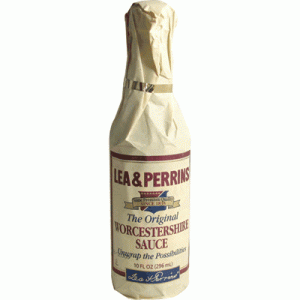
Lord Marcus Sandy, ex-governor of Bengal was an employee of the East India Company in the 1830s. There he encountered a condiment that appears to be a variety of fermented chutney that included fish, or it was served on fish. Either way, he like what he had eaten and when he returned to England he asked his local apothecaries John Wheely Lea and William Perrins of 63 Broad Street, Worcester to recreate what he had.
They did and apparently it was a gastronomic failure. But as Lea & Perrins company legend has it, the brutal brew was stored in a wooden barrel and by chance, sampled two years later. (Why is anyone’s guess!) Much to there surprise it had mellowed enough to be considered edible and the pair started marketing it in 1838.
To be fair, in the 1700 – 1800s ‘modernized’ and varied recipes for similar fish based condiments, using oysters in particular, were circulating in abundance in England as well as America. The ingredients were not fermented for years on end but cooked down to a thick caramelization. (That just does not sound as bad.)
On the other side of the pond, Sandy’s fellow Brits were participating in a culinary, cultural exchange of their own that would transform one particular type of secret sauce into an American gastronomical icon. That process started a century before Lord Marcus Sandy went to Bengal.
Emily Cappiello’s wrote an article for Chow Hound, A Brief History of BBQ, that sums up one of our most popular secret sauces.
“Barbecue, according to research done by The Smithsonian, began during the Colonial Era in Virginia. Colonists observed Native Americans smoking and drying meats over an open flame. Then, the British settlers put their own spin on it with basting, using mostly butter or vinegar, to keep the meat moist while grilling over an open flame. Years later, as slaves from the Caribbean were brought to the U.S., they also brought their own flavors, spices, and techniques. Thus, barbecue was born.”
The first commercially produced barbecue sauce was made by the Georgia Barbecue Sauce Company in Atlanta, Georgia. Its’ sauce was advertised for sale in the Atlanta Constitution, January 31, 1909. Not long after, a slew of other brands had entered the market.
BBQ’s lineage as a secret sauce may be as old as Taylor’s prepared mustard but another famous secret sauce had appeared on the store shelves of the Grand Old Union about forty years earlier then G.B.S.C. Inc’s per-packaged offering of down home smoky, spicy wonderment.
BBQ sauce, as well as another heralded secret sauce, owes its wide distribution to the Civil War. While canning food to feed the union troops, it was discovered that tomatoes were a perfect fit for the process. Subsequently, farm production of the formerly shunned fruit, known as the love apple, exploded. After the war, the tomato became accepted as an edible fruit and grew in popularity. As canned foods filled more shelves at grocery stores, across the country tomatoes out-sold all other products; which leads us to another tomato success story.
H. J. Heinz, son of German immigrants that settled in Pennsylvania in the 1840s, introduced his now famous recipe of Ketchup in 1876. It contained tomatoes, distilled vinegar, brown sugar, salt and a variety of spices that were a secret. He also pioneered the use of glass bottles, so customers could see what they were purchasing. Thanks to H. J.’s ingenuity, there is a bottle of Ketchup in most house holds across the fruited plains.
Now you may be thinking about ketchup’s twin, mustard. It had been around as a condiment longer then its red-skinned twin, but it took a George French to make it as popular.
George did this by serving it on hot dogs at the 1905 St. Louis World’s Fair. It did not take long for this publicity stunt to put a bottle of mustard in most American households, right along with the ketchup.
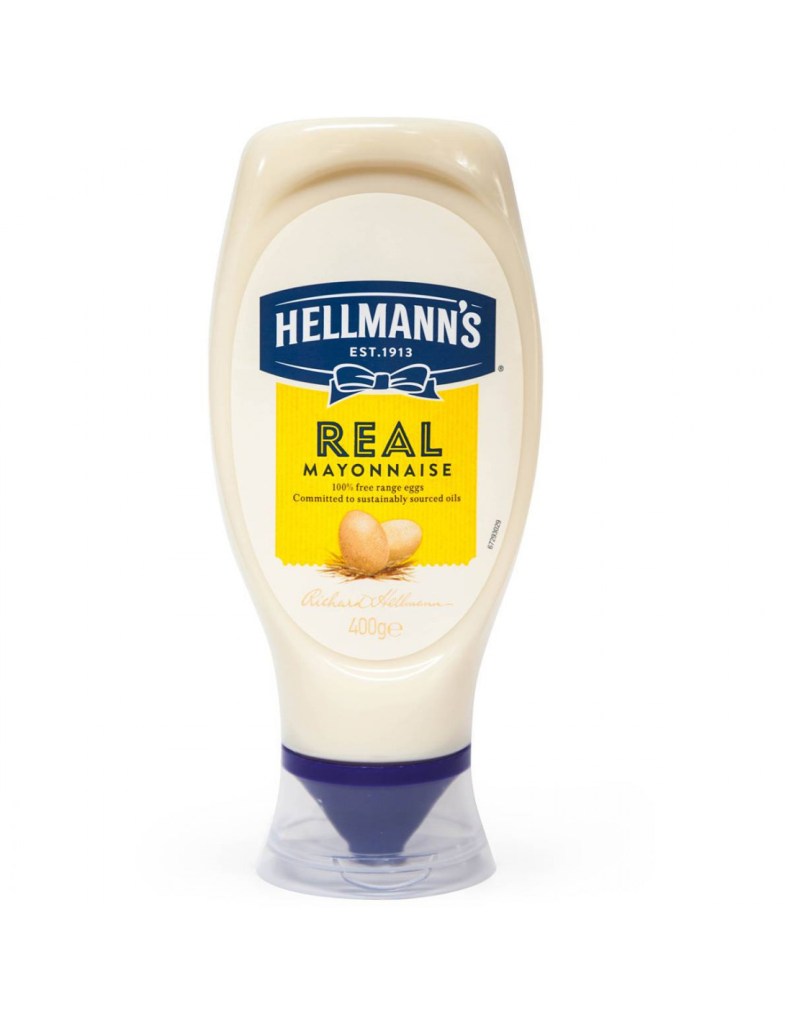
My research shows that 1912 was a pivotal date for its evolution and the development of the American secret sauce tradition. On that date Richard Hellman, who owned Hellman’s Deli in New York, sold his first glass bottle full of Hellman’s Blue Ribbon Mayonnaise, a date most cardiologists probably hold in infamy.
The way I see it, America entered it golden age of secret sauces in 1912.
Before I justify that claim, it would be good to know the components that make a secret sauce.
The basic flavor components for secret sauce is some combination of the following – sweet, sour, salty, spicy, smoky and organic fat and umami fat.
In general, secret sauces can be grouped into two categories. This grouping is based on the creator’s methodology of making the diner crave it to the last drop.
Group one balances flavors and sensations. There is tension set up by two opposing or different flavors that stimulates the taste buds and makes you want to eat more to experience that stimulation. In the short term this makes the food habit forming, culinary crack. BBQ sauce falls squarely in this category. The major flavor tension is between the sugar and the vinegar, the juxtaposing sweet and sour. Secondary is the tension from the big, fat mouth feel of the tomato base and the ephemeral nature of the smoky flavor notes. A black pepper finish can add to that crack affect too.
Group two relies almost exclusively on making the food feel big and fat in your mouth. Take the McDonald secret sauce for example. It is not a sophisticated dance of flavors playing off of one another like a tango or a ballet. No, not much finesse there, mostly the blunt instruments of creamy fat and sugar clobbering your palate into submission. I am not judging this approach; it works and that’s what counts here.
Soy sauce achieves the same result but without relying on organic fat like mayo. It uses salt to stimulate the taste buds and glutamates to tell your mouth this is big as well as satisfying. The salt is added and the glutamates are developed from fermenting the main ingredient, soy beans.
For those readers who don’t know what umami is this quote from Wikipedias’ article on umami will do nicely: “People taste umami through taste receptors that typically respond to glutamates, which are widely present in meat broths and fermented products… Since umami has its own receptors rather than arising out of a combination of the traditionally recognized taste receptors, scientists now consider umami to be a distinct taste.”
There is another ‘secret ingredient’ replicates the umami phenomenon – Maggi. Caramelized sugar derived from the sugar contained in vegetable, such as carrots and onions, results in the same chemicals the fermentation process yields. Caramelized sugar is obtained by applying dry heat, oven-roasting or sauteing, to a sugar-rich vegetable. The applied heat browns or caramelizes their sugar. The Swiss fellow Julies Maggi, who invented and marketed Maggi, knew this too. He cooked down his caramelized vegetables in water until a thick, dark, rich syrup resulted. That liquid, when added to a stew or a soup, gave it a deeper, richer flavor that was big and substantial on the pallet, not thin and watery.
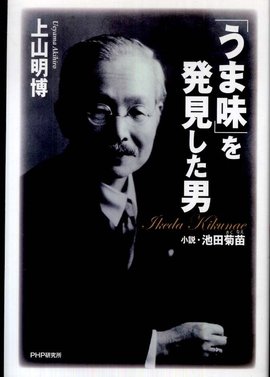
If you are the kind of cook who ascribes to the modern age adage ‘better living through chemistry’ then the compound monosodium glutamate is your go umami enhancing option. It has been commercial available in Japan since discovered by Kikunae Ikeda in 1905. However, an economical manufacturing process to produce it by the ton was developed in 1959 and made it affordable to the world market.
The mouth feel ingredients, liquid smoke, Maggi and soy sauce, create complexity and also fool your pallet into experiencing something it is really not experiencing.
These flavors and flavor enhancers that make up a secret sauce need a delivery vehicle, something to hold them together for transport onto the food then onto the palate. These items include, but may not be limited to mustard, mayo, tomato, sour cream, heavy cream, butter milk, ketchup, vinegar and oil. Some of these vehicles are secret sauce in their own right before the anything is added to them.
Back to 1912.
My rational for calling that year the start of the golden age is based on place utility. Every one of the ingredients I just mentioned was available to the American consumer at reasonable prices and in adequate quantities at that time. Now any housewife, fast food entrepreneur, classically trained executive chef, or weekend BBQ enthusiast could mix and match them and come up with a pop-culture favorite. Out of this age came many secret sauce favorites, such as McDonald’s special sauce, Hidden Valley Ranch dressing, Baby Ray’s Chicken Dipping Sauce, and Louisiana Cajun Style Seafood Sauce, to name just a few.
This brings the history of secret sauce to the present day. Please be aware, my history should not be confused with a formal dissertation published by the Oxford Press – too many fun facts and two pint conjectures for that.
But I do have a take-away from all this writing.
As I stated earlier, writing this post has challenged my notion that secret sauces are lowbrow cooking. Actually, they follow in the french tradition of Haute Cuisine.
Escoffier and Careme delighted the rich and famous by roasting fine cuts of meat and created complicated sauces to go with them. Many a humbler burger flipper and fry cook have done the same for their burgers and po’ boys. However, they went one better, they delighted millions of every class, rich or poor.
Everyone has to eat and everyone should take delight in what they eat.
The fine people at Word press who support this page gather plenty of metrics for it and present it on a really neat ‘dash board’. I enjoy the map that shows the country a viewer is visiting from. It represents them with the flag of their nation.
That gives me a global warm and fuzzy when ever I look at it. (Also learning the flags of the world.)
The other day I was perusing these stats and thought of one to include.
What percentage of the world population has found my little digital space in the six months it has gone live?
I took the visits and divided them by the world population and arrived at this –
.0000000071%
Talk about feeling small.
Then I thought to put that tiny number in a context, to give it some perspective.
One of the largest audiences in the United States, that I could find for any type of broadcast, is conservative radio show host Rush Limbaugh. He has about 30 million listeners per week . Other then taking his word for it, there does not seem to be any other way to verify that number. But lets go with it. Crunching that number I arrived at this –
.0057%
Hmm… that is impressive to say the least. If you look at that figure on an annual basis you arrive at 3%. Even more impressive.
That got me thinking again, Who is bigger? Who reaches the most people on the planet using any form of electronic communications?
The China Ministry of Public Security.
It sensors all the 730 million internet users in China every moment of the day and night. That effectively makes it the largest communications platform on the planet. I could not find one larger.
I read that it employees up to 50 thousand police to accomplish this mind boggling task.
Crunching their audience number comes up with this –
10%
Talk about feeling big.
One final number in this journey of scale.
If it would take 50 thousand people to censor 730 million then it would probably take 150 thousand people to censor 7 billion.
Oddly enough, this number of employees is not even close to the number of Chinese postal workers – 850 thousand plus.
That number is no where near the number of people employed by the world’s largest private employer – 2.1 million for Walmart.
Organizing the man power for world censorship of the web looks very do-able.
Feelings of sadness hang over the Archipelago today, a Gothic funeral pall woven from the darkest of fabrics. The bright, colored flags of my kitchen are flying at half mast and I doff my chef’s toque in reverence and mourning to my old friend.
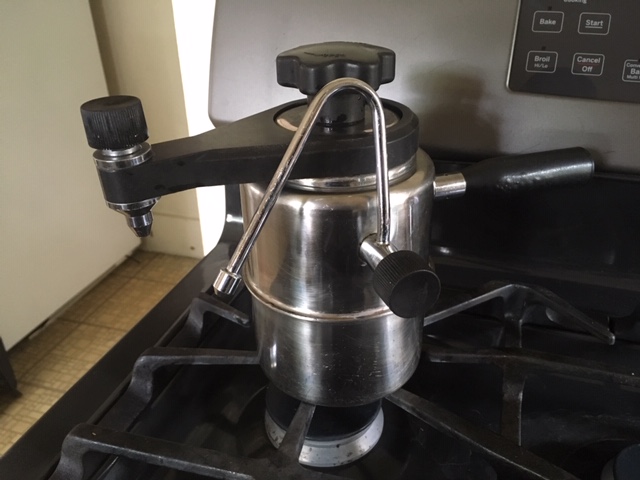
On this cheerless day, my Bellman – CX-25 espresso/cuppuccino maker has given up the ghost.
We go back a long way, Bellman and I, twenty years to be exact. It was bequeathed to me by my sous chef after she bought it at a garage sale for one dollar. It was a brand new, virgin kitchen utensil when she saw it sparkling in the summer morning sun out on the folding table in that driveway crowded with shoppers.
I was there when it brewed its first cup of the steaming, dark delicious. Together, for the next twenty years, we shared that ritual of making morning mocha magic.
After two decades of having enjoyed its faith full companionship, and one whose qualities of dependability and brewing consistency the practical chef in me greatly admired, I could not let Bellman fade away in the vast boneyard of broken power tools and out of style window blinds in the corner of my shop I rarely visit.
I went on a quest to find replacement parts for Bellman, or Sputnik as I affectionately refer to it. (It reminds me of an old-school satellite hurtling through the 1950’s night sky, high above the Earth, as it bounces transmissions of the Texaco Star Theater TV Show across oceans and continents.)
I searched for quite a while before I found what I needed.
It was at a store located in the old Italian section of Philadelphia, Fante’s – since 1906, that I found the gasket kit, the hope for resurrecting Bellman from the nether world of its demise!
As I write this, that assortment of red rubber rings are wending their way through the U S Postal system to the mournful shores of the Peoria Archipelago.
Hopefully, my future Bellman post will be about my old friend and I sharing a brew of the dark delicious as the morning sun streams into my freshly painted kitchen.
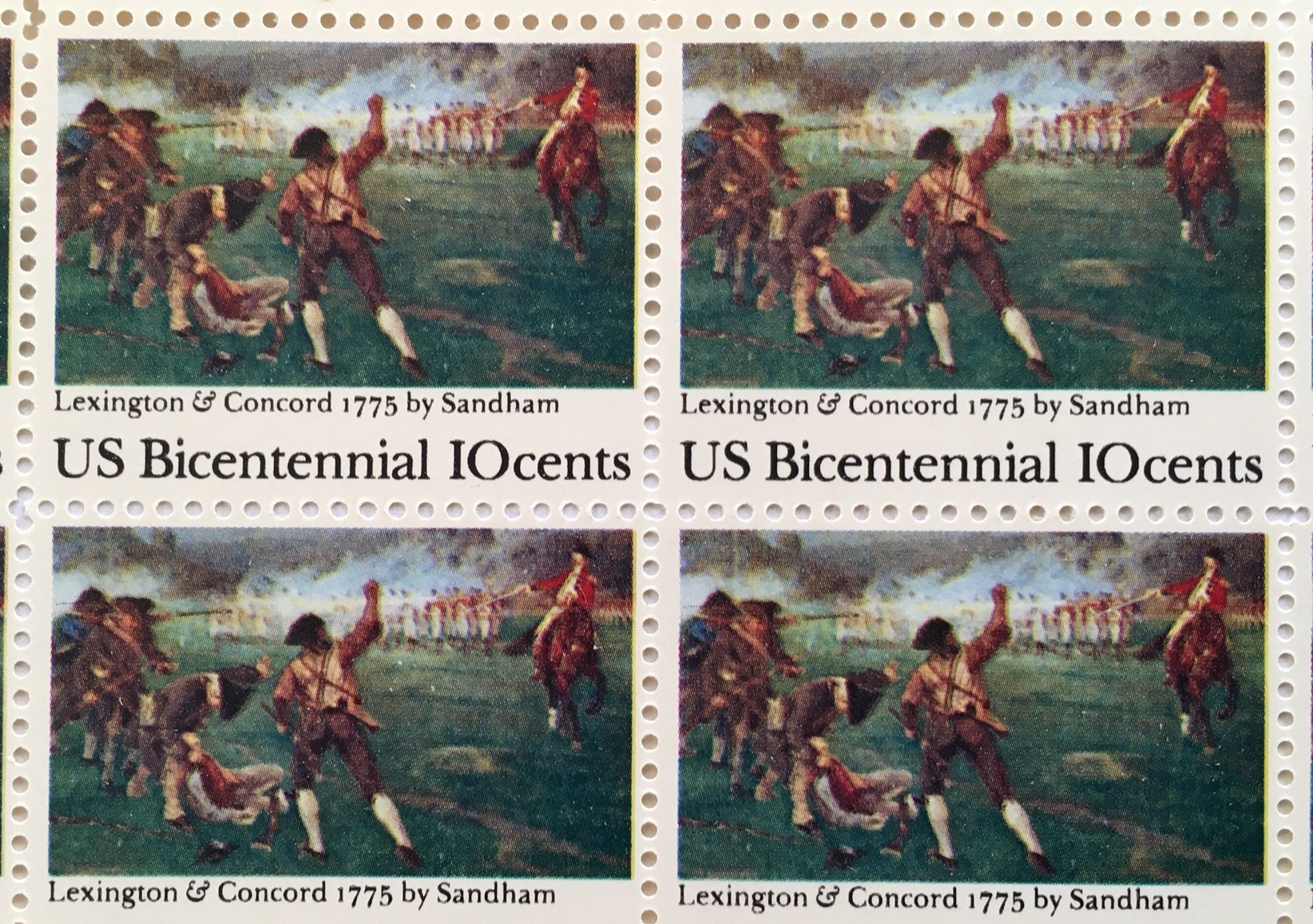
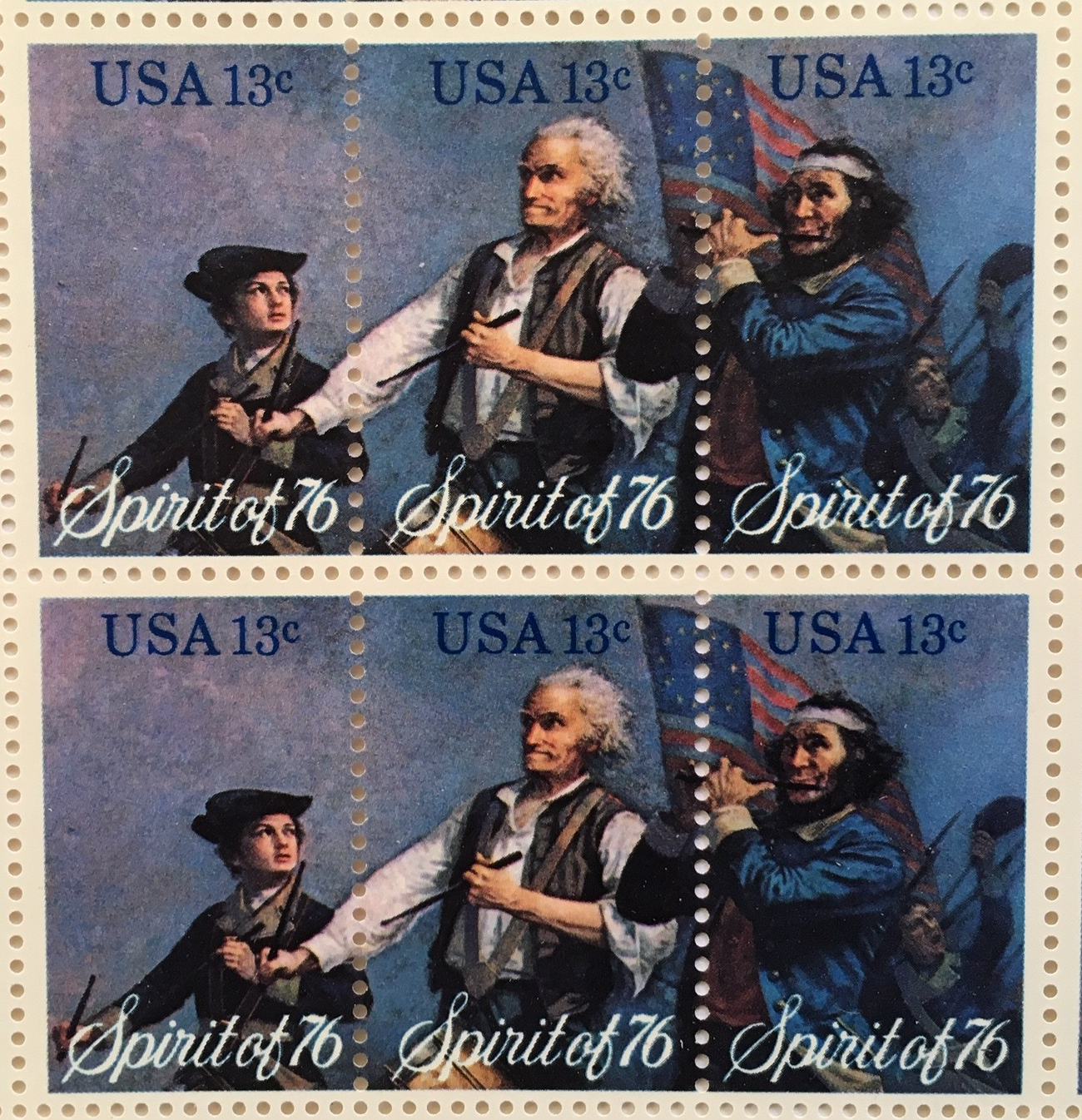
On September 17, 1785 the United States Constitution was Ratification and became the law of the land. 235 years ago this past Thursday.
I feel this is one of the most important, if not the most important, day of national remembrance for America. On that date the concept of liberty for the individual, and the means to secure it, where agreed upon as the guiding principles of our nation.
The freedoms that document ensures are a blessing that many peoples across the globe can only dream about, yet we live them everyday. The government the founders left us is truly a gift from God that we should be ever grateful for, fully understand and defend at all times.
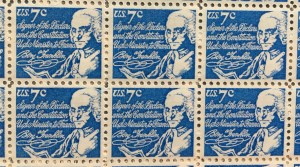
This week Prairie Beacon is celebrating the Constitution, and the events leading to it’s signing, with commemorative and definitive issues from the U.S. Postal Service; as well as words of wisdom from past presidents and patriots.
Happy Collecting !
America will never be destroyed from the outside. If we falter and lose our freedoms, it will be because we destroyed ourselves. – Abraham Lincoln
What light is to the eyes – what air is to the lungs – what love is to the heart, liberty is to the soul of man. – George Washington
Freedom is never more than one generation away from extinction. We didn’t pass it to our children in the bloodstream. It must be fought for, protected, and handed on for them to do the same. — Ronald Reagan.
“Whatever is my right as a man is also the right of another; and it becomes my duty to guarantee as well as to possess.” – Thomas Paine
”So I came to hazard all the freedom of America, and desirous of passing the rest of my life in a Country truly free and before settling as a Citizen, to fight for Liberty.” – Casimir Pulaski
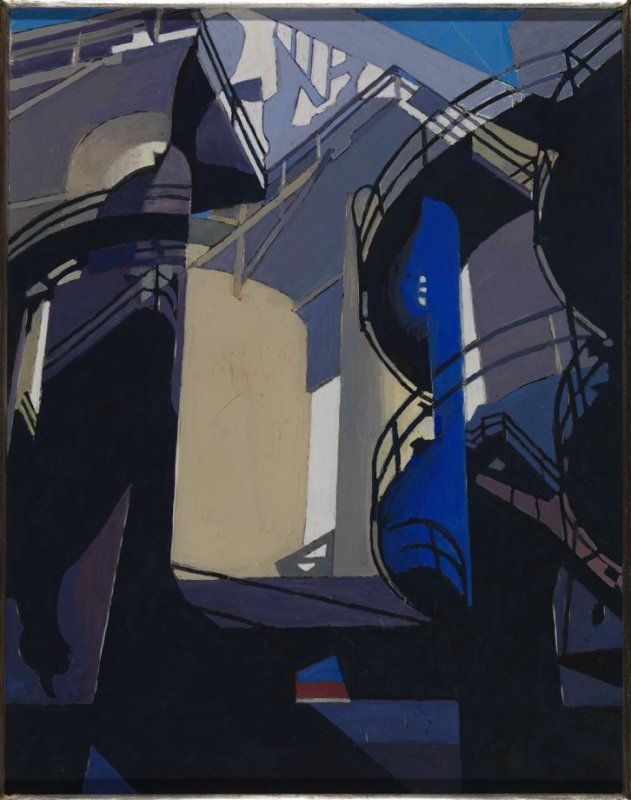
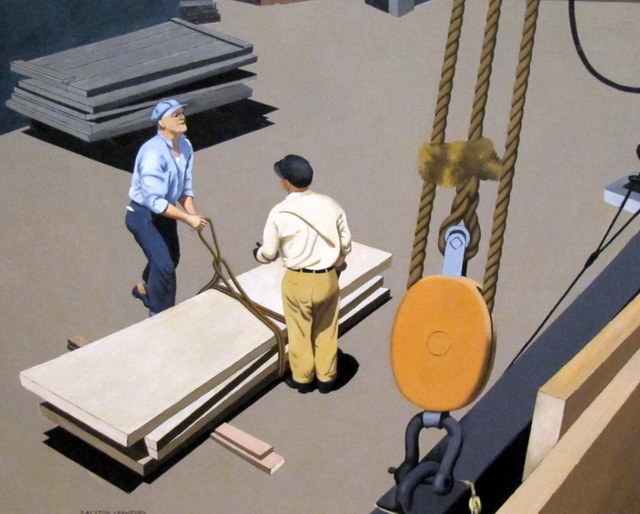
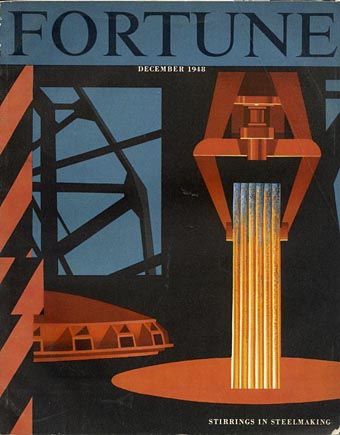
In my last post I made a reference to the school of Precisionist painters. For those who may not know, Precisionism was the first indigenous modern art movement in the United States. It developed after WWI and saw the peak of its’ popularity in the 1920’s and 1930’s. These artists embraced the geometrical forms found in the American Industrial and urban landscapes and used them to create pure art as well as commercial design.
I am not a fan of most modern art. The majority of it is social or political commentary that is very abstract and negative in nature. Frankly, this makes it difficult for me to relate to and ultimately enjoy.
But the Precisionist movement is not focused on issues and abstractions. It relates mainly to the physical world the artists inhabited. This allows me to connect to it, appreciate it, and enjoy it.
Since Precisionist artists used the surrounding environment as their subject matter, I view this school as a form of realistic landscape art transformed by the industrial revolution with some influences from Cubism. But there are two major differences that separate the landscape artist from Precisionist – choice of subject mater and presentation of the human figure.
First, Precisionists paint artificial landscapes and emphasize the geometrical forms within those landscapes. The square, blocky proportions of a factory, the multiplicity of curves formed by storage tanks, and the sweeping arcs and angles of a steel bridges become their landscapes.
Secondly, similar to landscape artists, people who appear in Precisionist paintings are details subordinate to the main subject. Landscape painters handle this with a reduction in scale of human figures with in the frame. Precisionists handle figures thematically. They create a sense of isolation and marginalization by juxtaposing the figures against the landscape’s artificial nature, which is depicted on a massive scale.
Despite the emotional void or anxiety the theme Precisionist paintings can evoke, I find them to be relaxing to view. Maybe that sense of isolation is comfortable because of my urban upbringing. In a way this emotion is similar to the solitude I also experienced when I spent time in the forests of New York State’s Catskills Mountains and landscapes of the Shawangunk Ridge. The geometric shapes employed in these paintings and choice of muted colors, adds to that sense of calm.
As you can see, I read a lot into these scenes and could not make that reference in my previous post without providing a brief explanation. If you find these artists’ work interesting, then my explanation was worth the time to write.
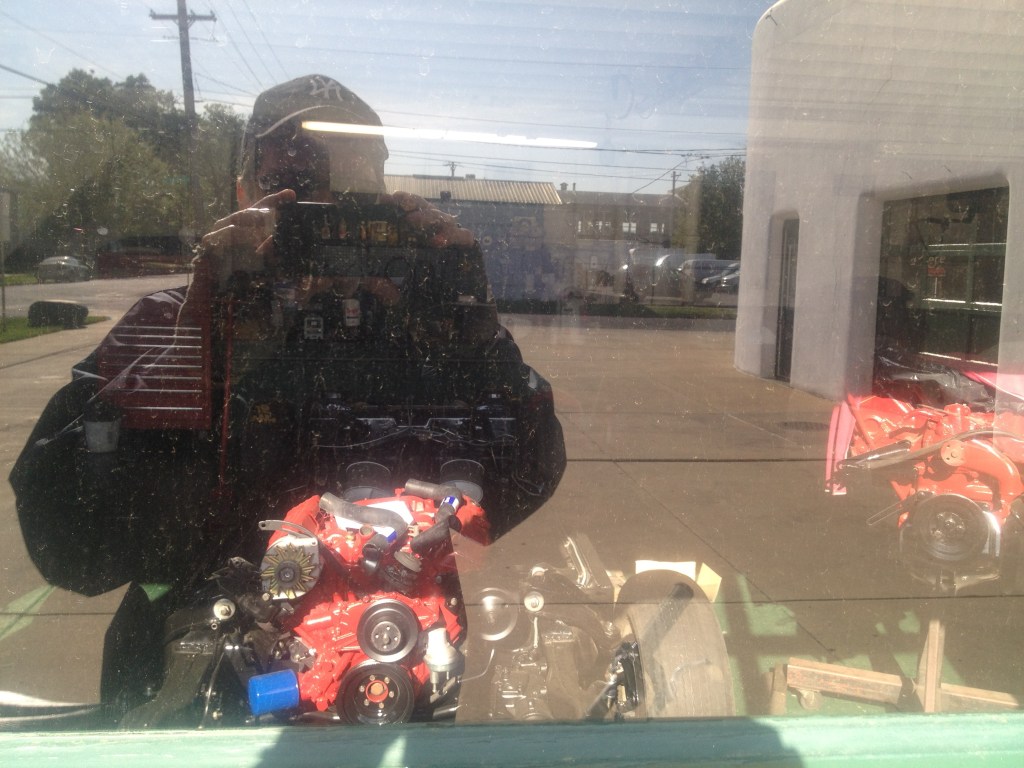
My Saturday morning bike rides are like trips to the art museum. They are short visits to the Precisionist wing that holds the hard-edged, industrial landscapes; the paintings that celebrate commercial products being manufactured and repaired, transported and warehoused.
There, I am surrounded by some of my favorite images; the busy mechanic’s garages off of Main Street
and the old brick factories and their rusting, weed filled rail-yards down by the river
Some of these images are composed of simple geometric forms that are limited in color. The larger than life scale of these forms can be imposing, but arranged together they create a minimalist esthetic that I find calming to view.
Others have a peculiar and unintentional beauty. A busy complexity, developed over time, that creates visual interest and stimulating viewing.
The images to discover on a Saturday morning ride are endless. Each time I venture out I find a new one to photograph.












































 Prairie Beacon