The First Restaurateur

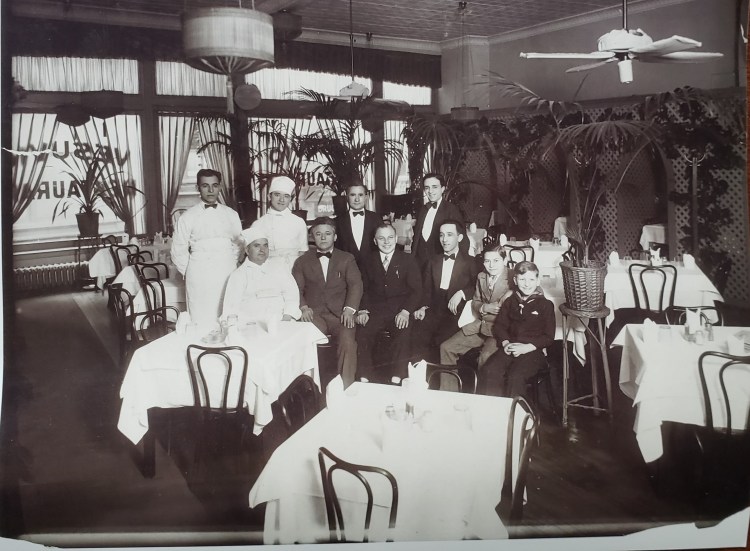
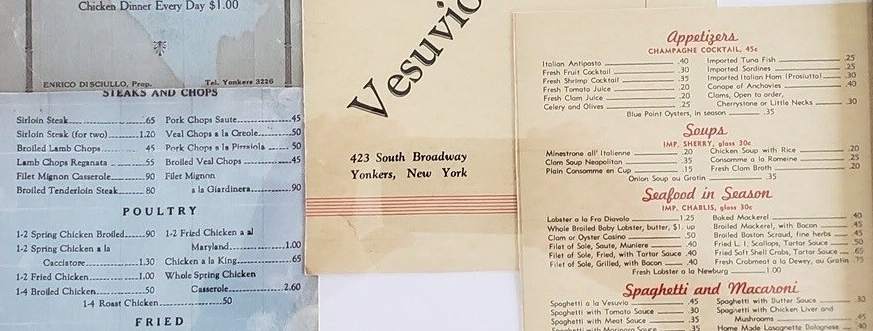
This was my grandfather’s restaurant located at 5-7 North Broadway, Yonkers N.Y.. Not too far from Getty Square, which at the time, was the busiest part of the city. The photo was taken sometime in the 1930’s before the depression.

Enrico Di Sciullo is in the front row, second from the left.

Check out the prices on the menu !

Spaghetti with Meat Sauce – Thirty Five Cents

A Prosciutto Appetizer – Thirty Cents

Sirloin Steak – Sixty Five Cents

Lobster a la Fra Diavolo – One Dollar and Twenty Five Cents. I’ll take two to go too!

Tastes have changed too. I don’t think I have ever seen Fresh Clam Broth or Spaghetti with Chicken Livers and Mushrooms on any Italian Menu.
But if Enrico put it on the menu, you know it was delicious.

I was lucky enough to eat his cooking when I was a kid. Fabulous tomato sauce. Fabulous everything!

(Actually, I was double lucky, my Dad’s mom, Florence, should have had a restaurant too! She was an out standing cook and baker.)

I often think about the lunches he would prepare when my brother Dan and I went to visit. Grandpa would usual serve us cube steak sandwiches. Just lightly floured, sauteed in olive oil then sprinkled with salt and pepper.
Nothing fancy but they were out of this world.

When you have perfected your technique, even the simplest dishes become master pieces.

An Adventure of Magnitude

The little green sprouts of oregano I saw in the over wise barren garden plot, got me thinking about what to grow this year. I set up my garden the same as my grandfathers did; centered around basil and tomatoes. Roma and Beefsteak tomatoes in particular.

My dad gardened too, but never vegetables only flowers. The majority of those flowers where Iris. At eighty five years old he still loves them. I make sure I buy my dad and mom flowers often.

That traditional approach made me think about varying my choices.

Looking up varieties of tomatoes, while I was having breakfast, got me looking up the varieties of other cultivated plants too.

So, to put the number of tomatoes types in context, and also see what has the greatest varieties, I made a list of the number of varieties for a few other plants commonly grown for food purposes. Some of these numbers are contested, by one source or another, but fascinating none the less.

  • Celery – 13
  • Kale – 23
  • Potatoes – 500
  • Figs – 800
  • Rice – 7000
  • Apples – 7500
  • Grapes for wine – 10,000
  • Tomatoes – 25,000
  • Wheat – 30,000
  • Corn – 80,0000

Funny how my intellectual adventure lead me to the very thing that surrounds my little island city of Peoria – corn.

Another fun fact; seeds for all the 80,000 varieties of corn listed are stored on the archipelago; The University of Illinois, Champaign/Urbana.

Last fun fact; Gardening leads to harvesting which leads to cooking!

Feel the need to dig further? See below.

https://web.extension.illinois.edu/veggies/corn.cfm

https://en.wikipedia.org/wiki/Wheat

Stamp of the Week – Clarifications and Corrections

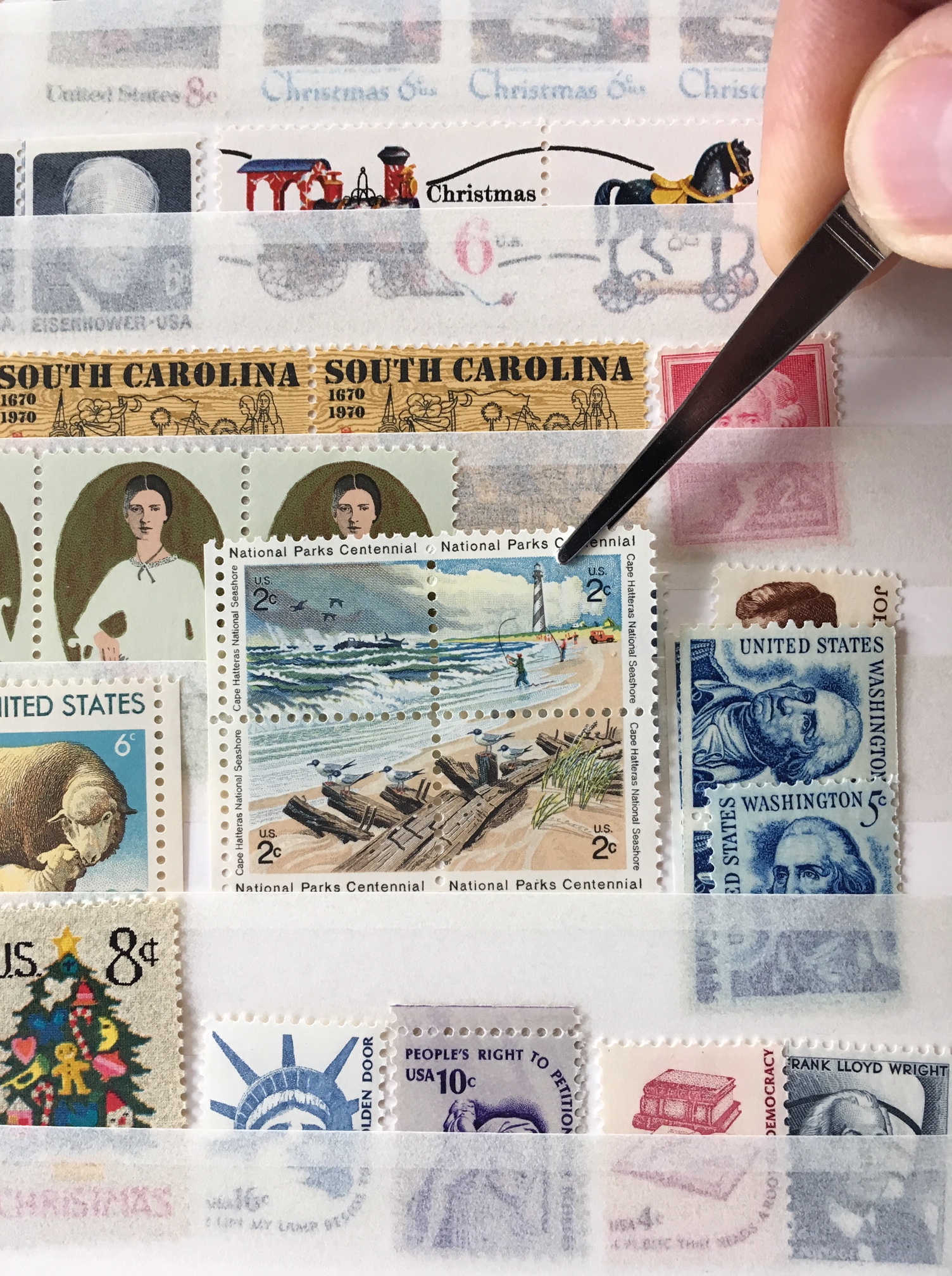
The last Stamp of the Week post requires a correction. Our brand new philatelic research assistant, that would be me, was mistaken in stating that the Cape Hatteras stamps was the first U.S. issue to have perforations on the image. The 1967 space walk issue, pictured above, was the first to be printed in this manner.

We apologize for the inconvenience and any undo hard ship this may have caused our readers.

Effective immediately, the employee responsible has been transferred out of the philatelic department and into the culinary department. He will be replaced with Mr. Zip Code.

Incidental Art

Food is full of artistic beauty, and not just the big high priced moment; like the world class elegance in the plates from Chef Michel Guerard of France. The small moments that surround us everyday also have artistic beauty and in unexpected ways.

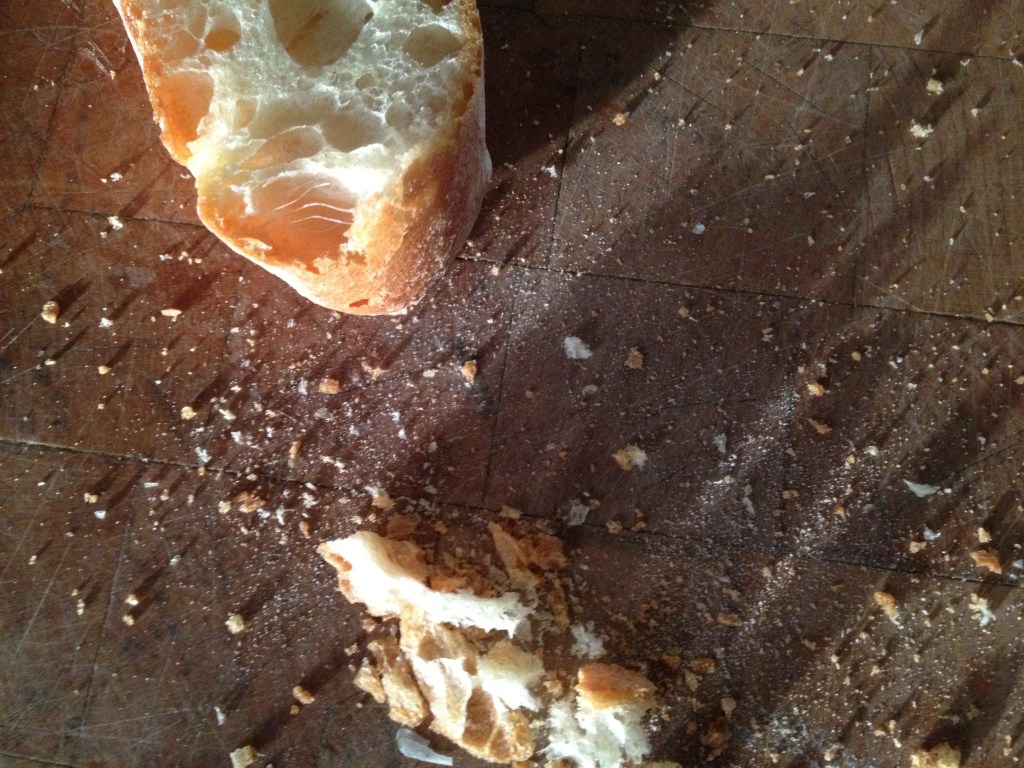
When I was making lunch today, I cut the crusty loaf of French bread and the light coming through the window made it look more like a dessert landscape than a slice of bread on a cutting board.

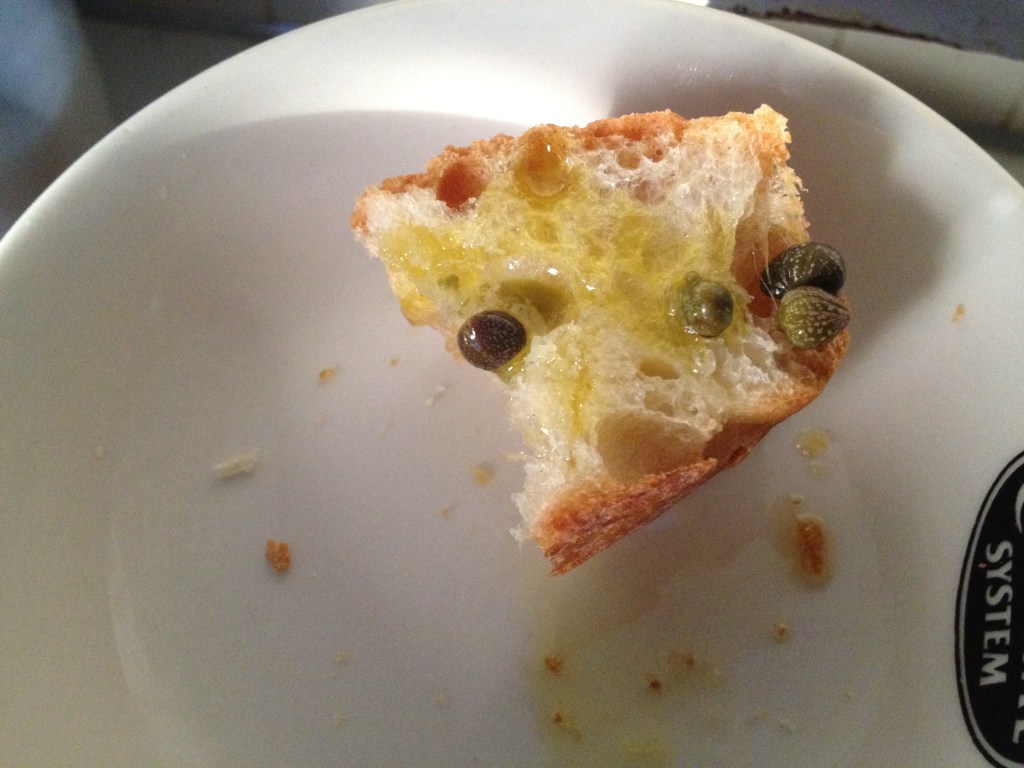
When I drizzled it with the olive oil and dropped a few capers the scene became more intimate.

After the first bite, I thought it could use a thin slice of rich Gruyere cheese and a sprinkle of cracked black pepper.

When I opened up the container and took the cheese out, I saw a neat pattern etched into the side of it. My wife had made a quiche with it, and that pattern was from running it against the hand grater. It reminded of a carved block of marble from the edifice of a Federal building or a Roman ruin on the Palatine Hill.

The smallest, simplest moments in cooking can be an adventure.

Also, this week I am adding a page dedicated to cooking. The best recipes, and wisdom from my thirty years of chefing.

Stamp of The Week

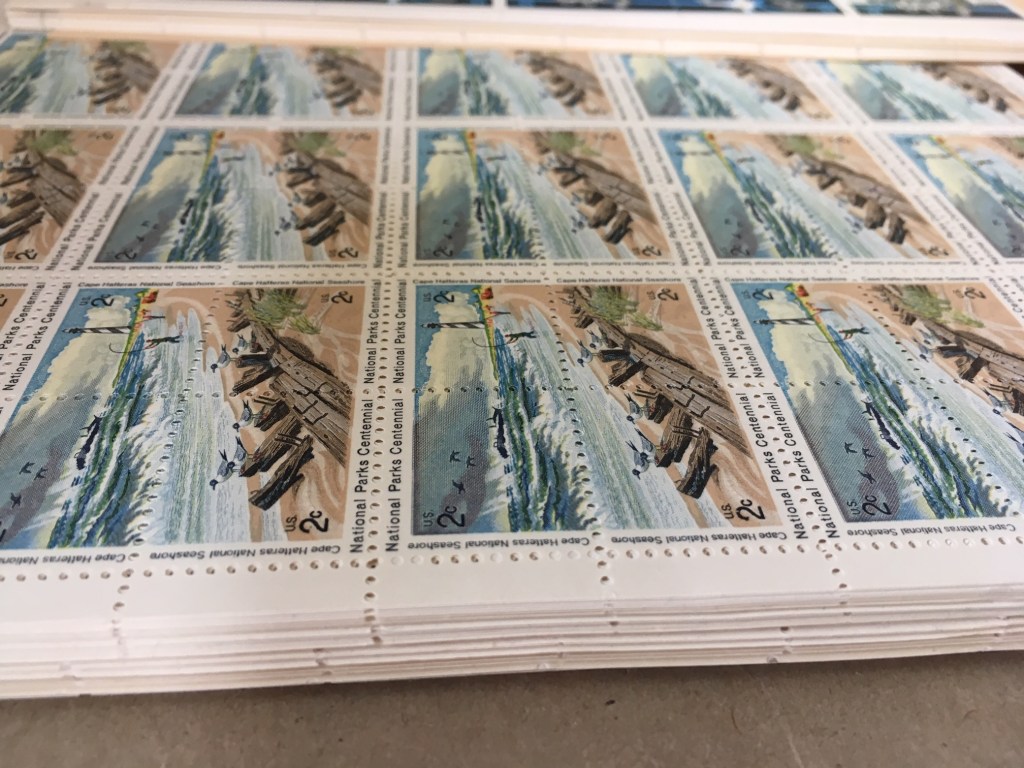
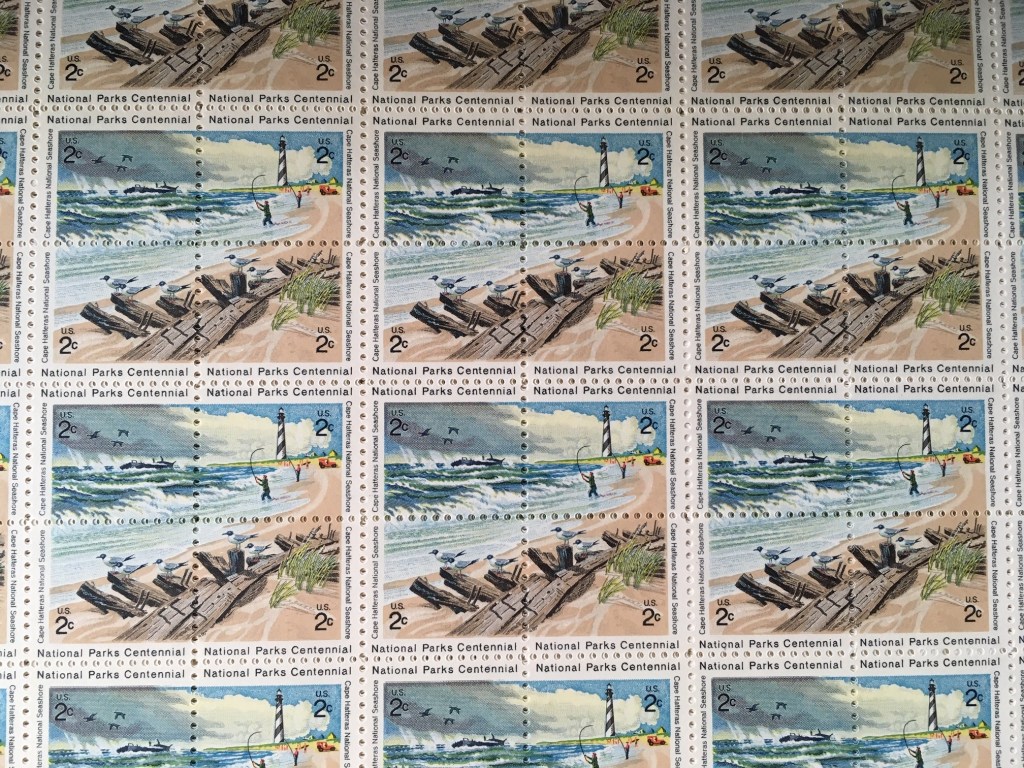
This week we feature the 1972 U.S. Postal issue commemorating Cape Hatteras on the Atlantic coast of North Caroline .

This stamp is a mile stone in U.S.Postal Service stamp design. It is the first stamp that the image was not contained with in the bounds of the perforation. I recall that at the time it was issued, the postal service was concerned it would not sell because of the unique character. To hedge their bet on the stamp buying public, they printed half the usual number of sheets.

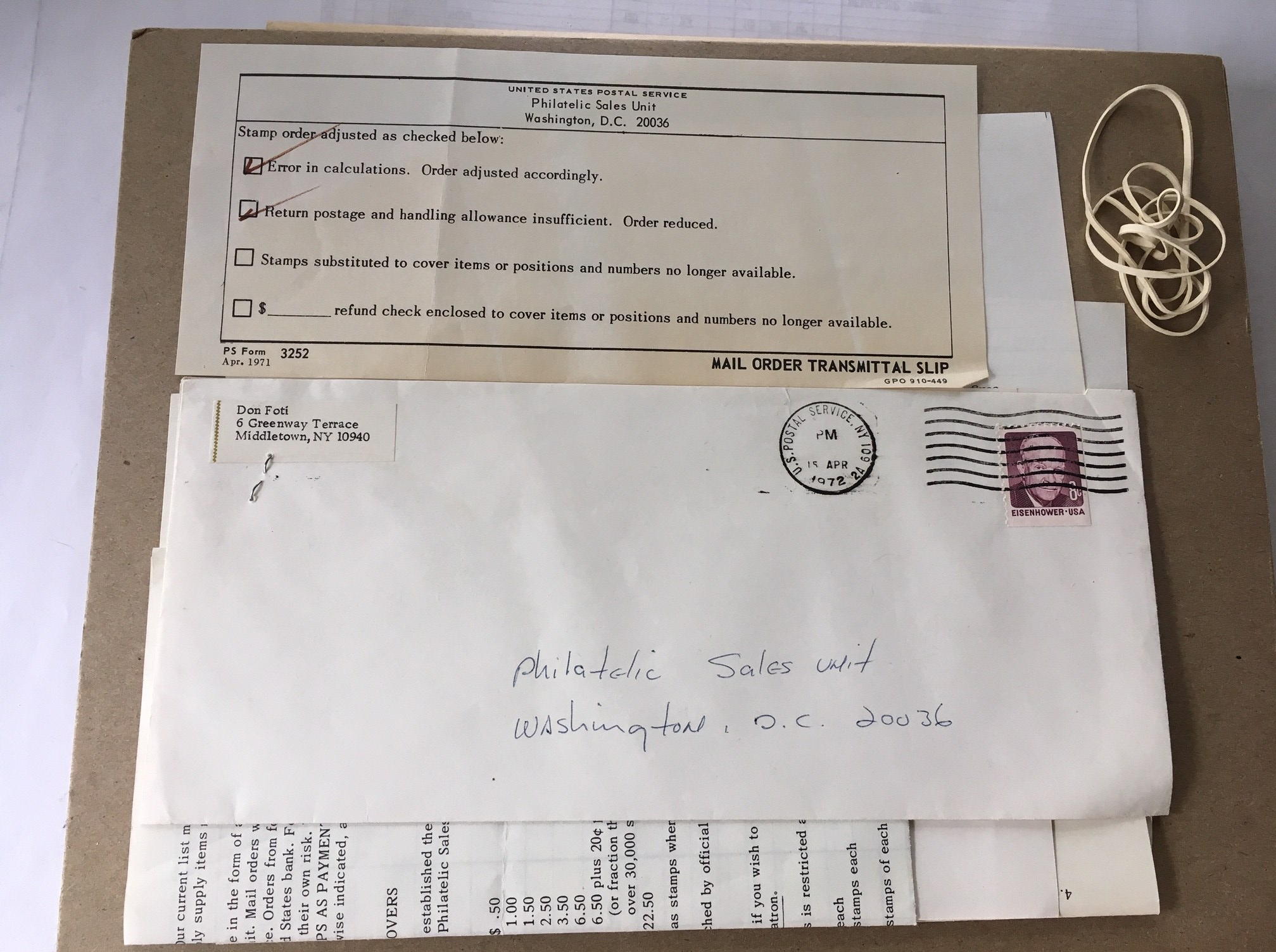
My dad, who I got involved in stamp collecting, knew the print run would be small. He purchased two hundred fifty sheets directly from the postal service in Washington D.C., thinking they would be more valuable then most commemorative issues.

Well, it was a big success so the Bureau of Engraving and Printing cranked up their Giori Press and did not stop until over ten million complete stamps were printed. The additional print run of designer Walter D. Richards’ beautiful beach scene set their value in line with most issues of the day.

My dad kept the stamps and now I have them. They are still in the original packing from the post office, which is a philatelic artifact in and of it self.

Four Generations of Fabulous Food

On my mom’s side of the family, God gave everyone a super power – cooking.

An aunt and uncle from the Pellegrini branch owned a small restaurant in Brooklyn until the mid 60’s. I eat there when I was a kid. They changed the menu selection every day and the food was delicious.

The DeScillio branch, my grand father Enrico, had a banquet hall in Yonkers N.Y.. It was named the Visuvio and was located on Broadway from the 1930’s through the 1950’s. A swanky place, although I was too young to have experienced it. I saw photographic examples of it’s swankiness- potted palm, white table cloths, raised band stand, and a press tin ceiling. It had about 200 seats and it was very popular.

Enrico DiSciullio’s son James, who will be ninety years old on Monday 4/13, had a place on South Broadway in Yonkers, Luigi’s, until the 1990’s. There was a mural of Naples Bay on a dining room wall, complete with a smoking Mt. Vesuvius in the distance. My uncle was an accommodating and entertaining restaurateur who served great food. Every visit there was a treat.

My place Dominic’s Restaurant, continued that tradition on the Archipelago island city of Peoria. Most of the food I served in that dining room was made from scratch using dishes and an approach to cooking I learned from my family, and a few great chefs I worked under in New York. Next to the dinning room was the Vesuvio Lounge. (Is there a pattern developing here with that volcano?) Guests went in there after dinner for martinis and live jazz.

Happy to say, the cooking super power has been handed down to my daughter. She is taking her collage classes on line, so we are seeing a lot of her these days. I also have the opportunity to watch her cook breakfast and lunch. Being a runner, she prepares dished largely from a health concision perspective. She incorporates current nutritional thinking into her dishes and I am learning a lot from her. Not to say I cook unhealthy food, but she does way more research on nutrition then I do. My approach is more intuitive, based on what has worked for me over time. But, you are never too old to learn something new and useful!

Below are two dishes I thought were tasty and well presented.

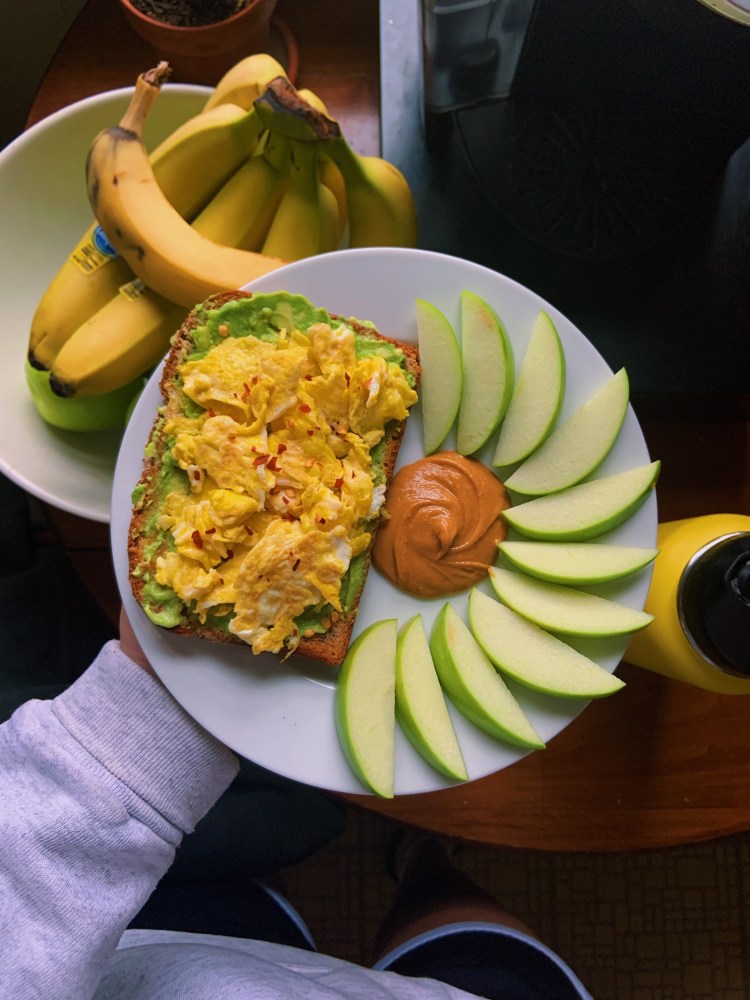
First is breakfast; Scrambled eggs on avocado toast seasoned with sea salt, red pepper flakes and garlic powder. Side of tart, Granny smith apples and natural peanut butter.

A runner's breakfast.
Processed with VSCO with c1 preset

This second one is the lunch version of the breakfast plate; Sub the scrambled eggs for a sunny side up egg.

Processed with VSCO with c1 preset

Stamp of the Week

Why write about stamps? Well, stamps have many qualities that make them worthy of your time. There are three qualities I find unique for one piece of printed material to have.

One, they measure on a monetary scale the effort it takes a system to move an object of a particular size and weight from one point to another. In a way it is physics expressed in dollars and cents. Secondly, They open your mind to new ideas and new knowledge, like the index of a great encyclopedia might do. These little perforated paper squares commemorate great people, monumental events, amazing places, or revolutionary inventions and discoveries; many you may know little about. Finally, you get all this in a small and interesting piece of artwork that is neat to look at.

2015 Bulgarian commemorative, Science and Technology Park. A nicely stylized illustration of the planets orbiting in the night sky. It is my understanding this issue has a circulation of twelve thousand stamps. A typical issue in the U.S. tops one hundred million stamps. However, the population of Bulgaria is nine million as compared to the population of the U.S. being three hundred and twenty nine million.